
BC property inspection guide
Perimeter Drainage Failure: Signs in BC Homes
Perimeter drainage failure may lead to damp areas near a home's foundation. Wet basements, poor grading or water stains can raise concern, but these signs do not prove a buried drain has failed. Further testing may be needed.
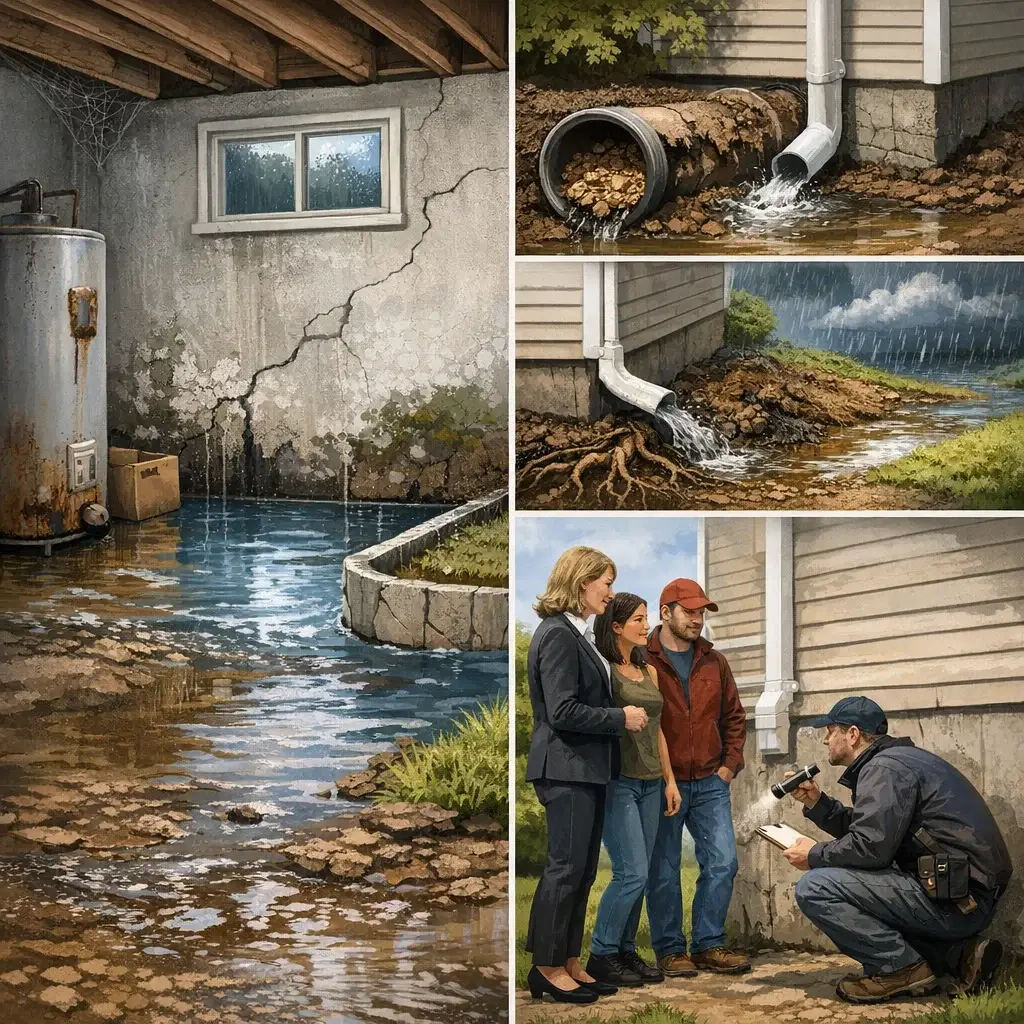
Quick answer: Possible signs of perimeter drainage trouble include water entry near foundations, damp crawlspaces, ponding beside walls and repeated basement staining. These signs do not prove a buried drain has failed. A specialist may need to inspect the drainage system to find the actual cause.
Which signs suggest a drainage concern?
Visible basement dampness, recurring lower-wall staining, water near the foundation, saturated soils or notable efflorescence can prompt investigation. These signs are not exclusive to drain failure: grading, roof runoff, plumbing leaks and waterproofing issues can produce similar symptoms.
How does site grading influence the risk?
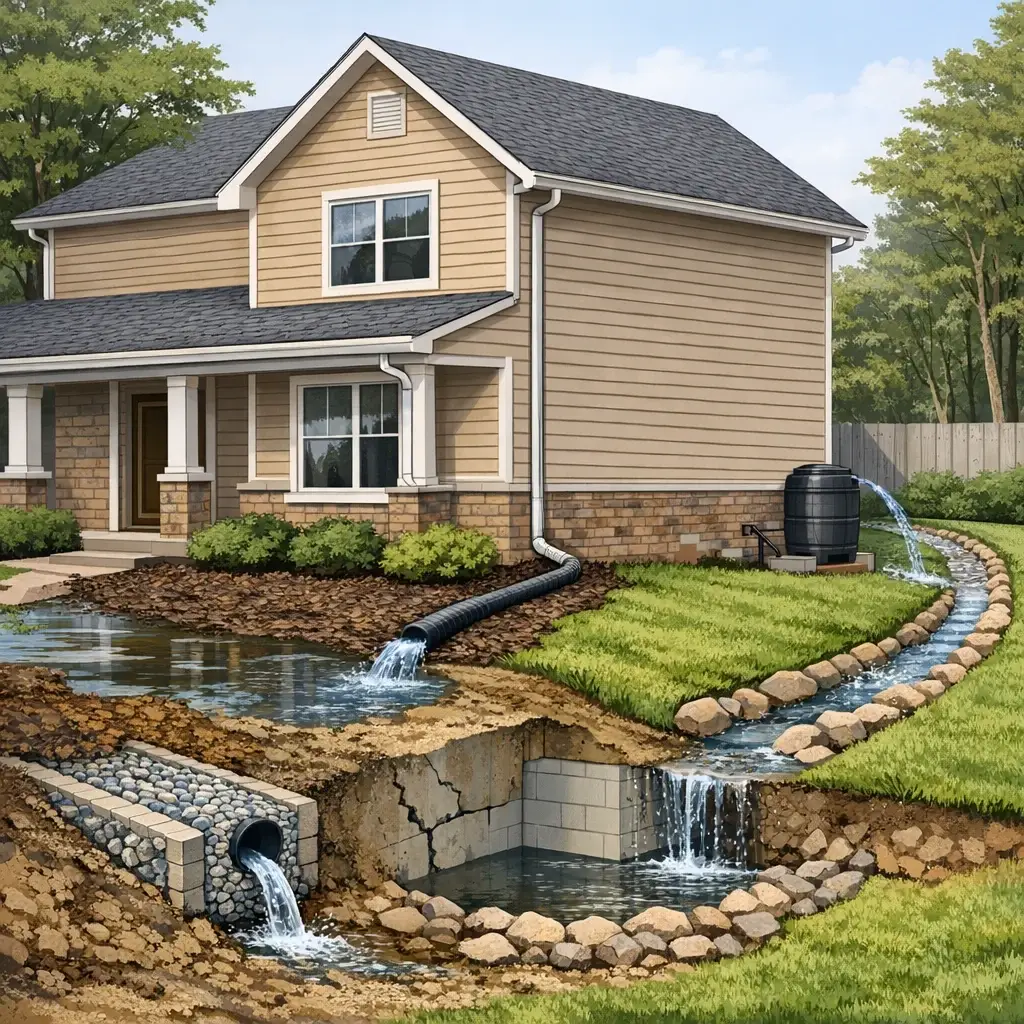
If soil slopes toward the building or downspouts discharge near foundation walls, excess surface water may collect at vulnerable areas. Maintaining gutters and directing discharge appropriately may be part of broader management.
The suitability of modifications depends on the property and local requirements.
What can a home inspector actually observe?
An inspector can note accessible grading, drainage outlets, foundation areas and moisture indicators. The buried perimeter piping, its configuration and operation generally cannot be fully evaluated without specialized equipment or excavation.
See inspection limitations in BC.
How is the problem investigated further?
Depending on the symptoms, a qualified drainage contractor or other specialist may recommend camera work, testing or excavation. Ask for past waterproofing and drain replacement records. A quoted repair should address the diagnosed source of water, not only interior staining.
Use what the property reveals: A general guide is a starting point. Decisions should be based on actual accessible conditions, the written inspection scope and relevant specialist advice.
How can buyers respond before purchase?
- Ask about previous water entry and drainage repairs.
- Document visible low-point staining and wet areas.
- Check accessible roof runoff and grading details.
- Arrange specialist assessment when the observations warrant it.
- Consider findings and deadlines with your property adviser.
More on efflorescence and moisture ingress.
What matters for BC homes?
Rainfall and ground conditions vary across BC. Heavy wet-season storms can overwhelm poor site grading on the coast. Snowmelt and irrigation can also drive moisture toward foundations elsewhere. Driveway slopes, retaining walls and changes to nearby landscaping may alter where water travels.
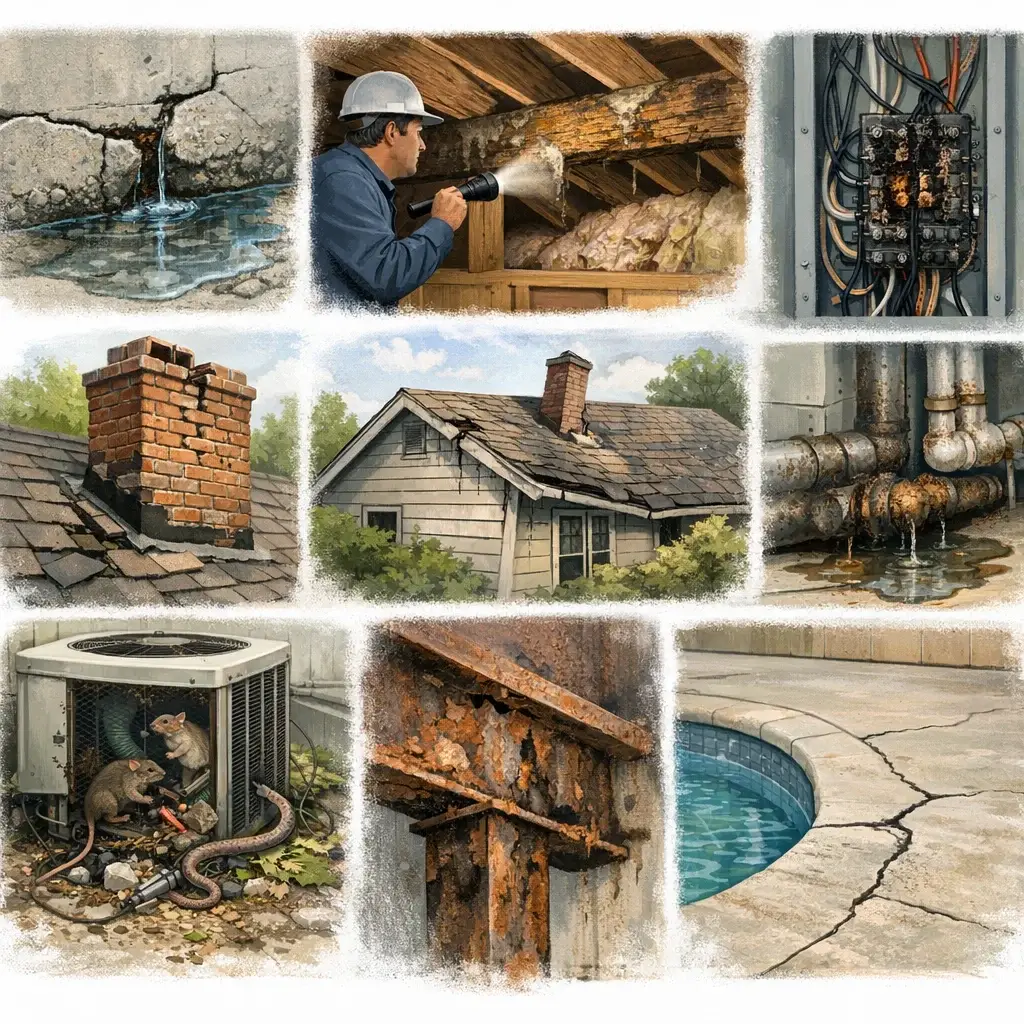
A buried drain cannot be judged by looking at the soil surface. Even a dry basement on inspection day may have leaked in an earlier storm. Ask about sump pumps, backflow devices, waterproofing and prior excavation where relevant. Remember that a storm drain, footing drain and sanitary sewer are different systems, and not every property is built with the same arrangement.
Example situation: how the issue can appear
This is an illustrative example, not an actual client case. A homeowner in Port Coquitlam sees damp carpet after storms. The yard slopes toward a basement door. The cause could involve surface grading, a door threshold or underground drainage. It would be a mistake to quote one repair without first tracing the water route.
How to make a sound decision
Start with what you can see. A plugged gutter or downspout spilling beside the house may create water problems even if the buried drainage line is clear. If surface measures do not solve the issue, a drainage contractor can discuss further testing and options. No visual inspection proves the condition of hidden drain tile.
A four-step checklist
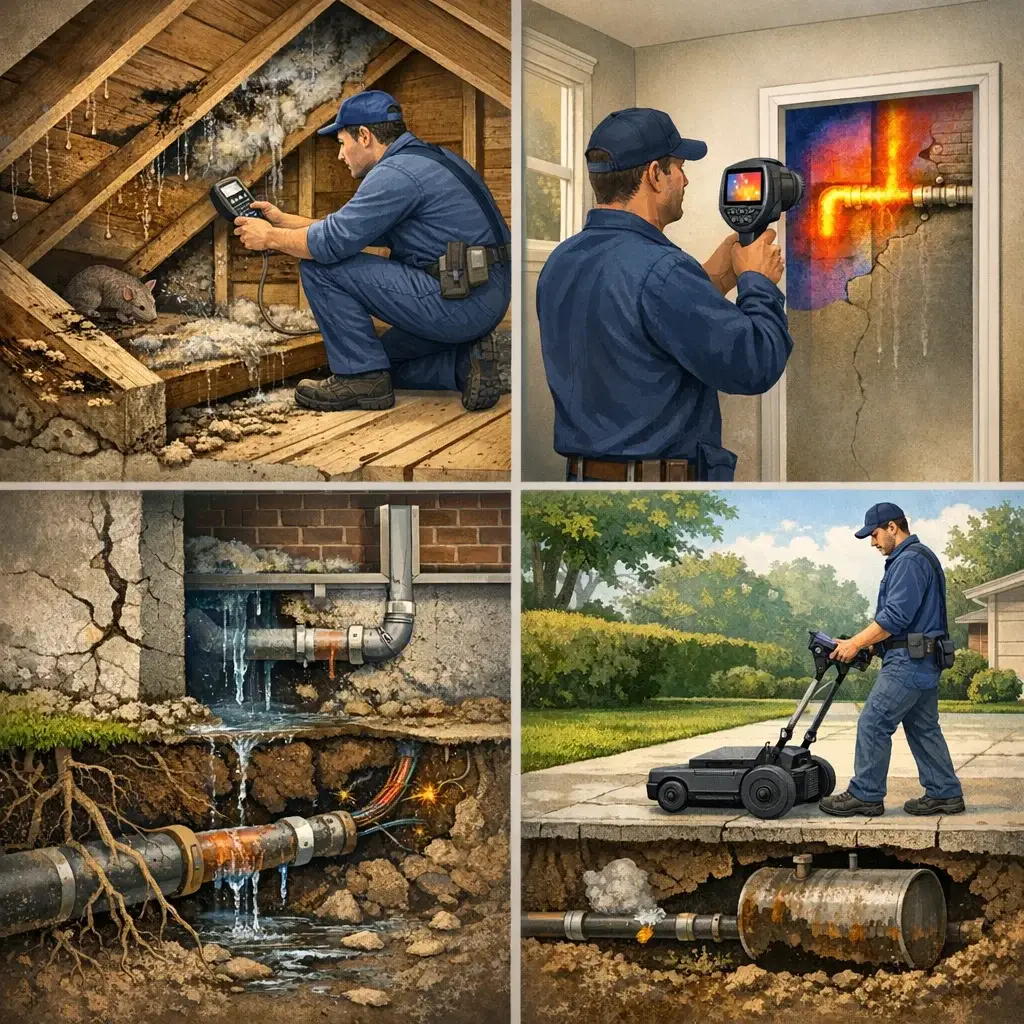
- Note the dates and weather when water appears.
- Inspect visible gutters, downspouts and grading from safe areas.
- Ask about previous drainage repairs and waterproofing.
- Seek a drainage specialist for recurring or significant water entry.
Keep your notes simple: record the date, the part of the building, what you observed and who should answer the next question. Ask for written facts when you can. A home inspection is one piece of the decision, not a test that makes every risk disappear. If the cause is hidden or the work needs a specialist, get the right person to check it before relying on an estimate.
Key terms explained
- Perimeter drain
- A drainage system intended to move water from around a foundation.
- Grading
- The ground slope around the home.
- Sump pump
- Equipment used to pump collected water away from a low point.
What you should expect from a careful report
Look for clear photos, the exact location of each finding and plain words about why it matters. The inspector should state when an area was not seen. A note about a possible problem is not a final diagnosis. Review the written scope as well as the findings, then ask about safety, maintenance and work that may need a qualified professional. These steps help you avoid both undue worry and false confidence.
BC inspection experience and trustworthy sources
ENG Inspections is owned and operated by Nigel Greenidge. Nigel has worked with building and renovation projects for more than 20 years and has carried out home inspections since 2016. His listed Consumer Protection BC home inspector licence is #72615. He works directly with clients and uses photo-supported observations. This guide provides general education; it does not claim that Nigel personally inspected the example property.
To check the relevant provincial information, see Consumer Protection BC: Home inspections. Rules, deadlines and coverage should be checked against current official information and your own documents. The inspector can explain property conditions, but legal, engineering, insurance and warranty decisions may need other advisers.
Related BC guidance and services
For province-wide coverage, explore inspection service areas across BC. For deeper reading, compare moisture ingress and efflorescence, inspecting an older BC home, and pre-purchase home inspection services. If you have a property deadline, discuss the agreed scope before you book.
Apply the guidance
Using This Advice for Your BC Property
Note the dates and weather when water appears. Ask about previous drainage repairs and waterproofing. The right next step depends on the building, its records and what can be seen safely. For a property in British Columbia, ask about the agreed inspection scope and share any deadlines before arranging a visit.
For a specific home, compare buyer inspection services, BC home inspection service areas, or discuss the property with Nigel.

Frequently asked question
Frequently Asked Questions
Does a dry basement prove perimeter drains are fine?
No. Conditions can vary by season and weather; underground pipe condition remains largely concealed.
What does perimeter drain mean?
A drainage system intended to move water from around a foundation.
What should I do next about this issue?
Note the dates and weather when water appears. Seek a drainage specialist for recurring or significant water entry.
Need a property-specific review?
Discuss an Inspection With Nigel
If a property decision is approaching, share the address, property type, and deadline. ENG Inspections can discuss a suitable visual inspection scope and quote.