
BC property inspection guide
Moisture Ingress and Efflorescence: Warning Signs
Moisture ingress and efflorescence are two signs worth understanding when checking a home. Moisture ingress means unwanted water has entered an area. Efflorescence is a white, powdery deposit that can appear on concrete or brick.
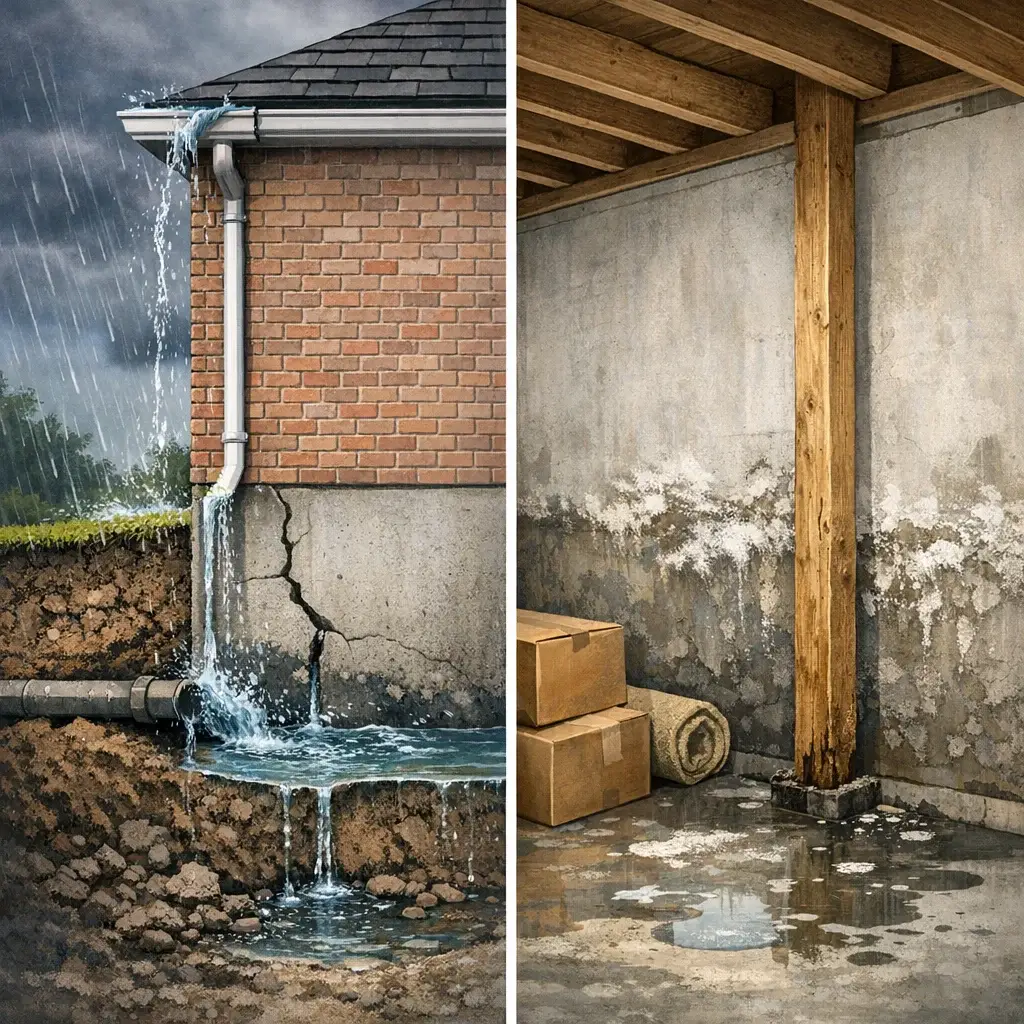
Quick answer: Efflorescence is a white, powdery mineral deposit that can form when water moves through masonry and then dries. It is a clue to past or present moisture, not a diagnosis of the cause. Look for wet patches, staining, smells and drainage problems before choosing a repair.
What does efflorescence look like?
It often appears as a light-coloured, powdery or crystalline residue on concrete, brick or other masonry surfaces. It points to moisture movement and mineral deposits, but it does not independently identify the water source or the current severity of a problem.
Similar-looking staining can have different causes, so interpretation requires context.
Where does water commonly enter a building?
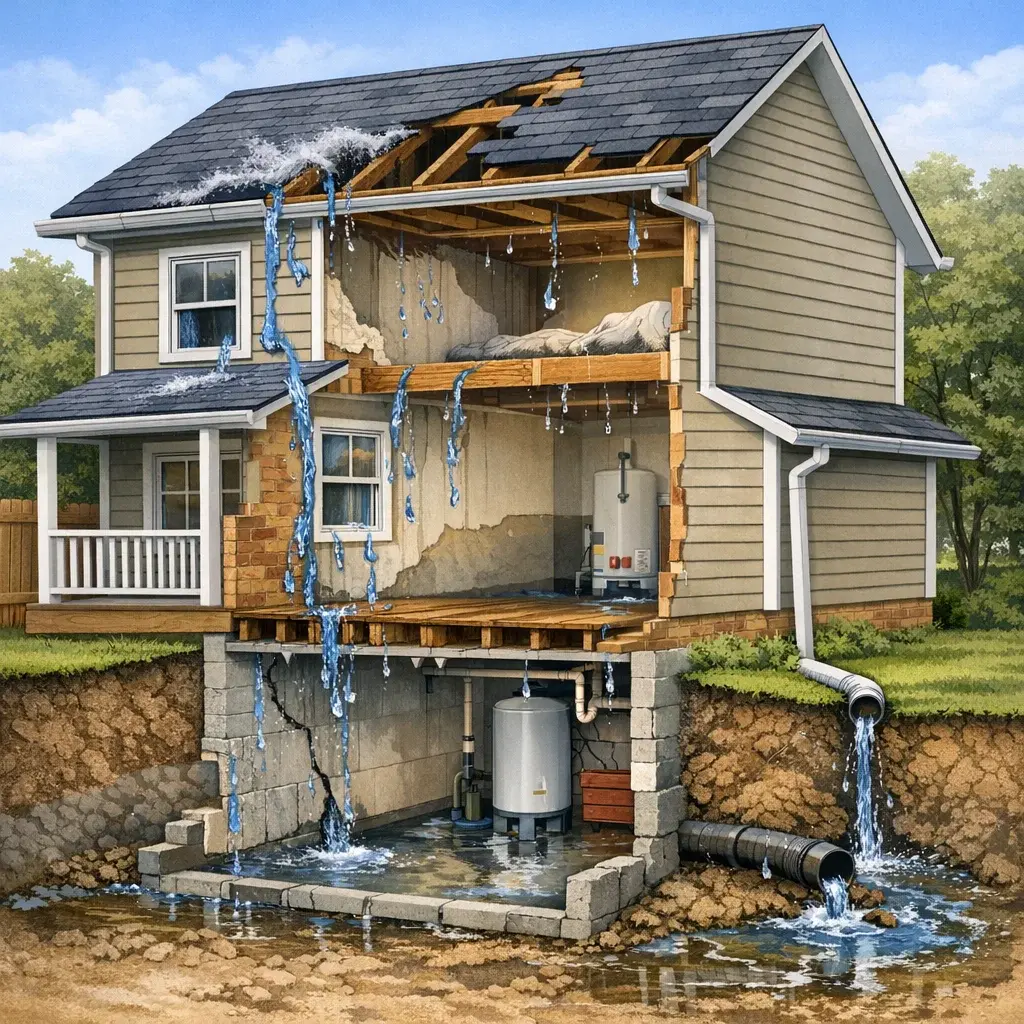
Potential pathways include exterior wall joints, roof details, window penetrations, groundwater pressure and poor surface drainage. An inspector examines visible clues and accessible water-management features rather than assuming one cause.
For related site concerns, see perimeter drainage failure signs.
What other visual clues may matter?
- Discoloration or peeling finishes near windows and foundation walls.
- Persistent damp smells or condensation patterns.
- Staining around plumbing fixtures and penetrations.
- Cracks, deterioration or repeated patching in water-exposed locations.
- Water accumulation near a structure after rain.
Can a moisture meter or thermal camera identify the source?
These tools can help investigate particular observations but are not conclusive by themselves. Thermal imaging shows temperature variation, which may reflect factors other than moisture. Hidden material testing and water-entry diagnosis often require specialists.
See how thermal and moisture tools are used.
Use what the property reveals: A general guide is a starting point. Decisions should be based on actual accessible conditions, the written inspection scope and relevant specialist advice.
What should buyers and owners do next?
Document locations and conditions, ask about repair history and seek evaluation where active leakage or material damage is suspected. Prompt attention to continuing water entry can reduce avoidable deterioration.
Building-wide context is covered in building envelope concerns in BC.
What matters for BC homes?
In rainy parts of BC, foundation walls, garages, crawlspaces and exterior steps often face repeated wetting. In drier regions, snowmelt, irrigation or a plumbing leak may also supply water. The source matters: surface runoff and a leaking pipe call for different fixes.

The white deposit itself does not tell you if the wall is wet now. Some marks remain after a past event. You may need timed moisture checks or a closer look at rainwater paths. If you see peeling paint, musty smells or soft materials nearby, record them as separate signs. More than one cause can exist at the same time.
Example situation: how the issue can appear
This is an illustrative example, not an actual client case. A buyer notices white marks on a basement wall in a Richmond house. The nearby downspout empties beside the foundation. It is reasonable to ask about drainage, but it would be premature to claim that the drain tile has failed without further assessment.
How to make a sound decision
A moisture meter or infrared camera can help identify areas worth checking, but readings do not by themselves prove water is coming through a foundation. Weather and recent use of the space can affect what you see. Keep photos with dates and note whether signs appear after rain.

A four-step checklist
- Document where the deposit appears and when it changes.
- Check visible grading, downspouts and nearby water sources.
- Avoid painting over damp areas before the cause is understood.
- Ask a qualified drainage or building professional to assess persistent moisture.
Keep your notes simple: record the date, the part of the building, what you observed and who should answer the next question. Ask for written facts when you can. A home inspection is one piece of the decision, not a test that makes every risk disappear. If the cause is hidden or the work needs a specialist, get the right person to check it before relying on an estimate.
Key terms explained
- Efflorescence
- A white mineral deposit left when water evaporates from masonry.
- Ingress
- Water entering a part of a building where it should not.
- Thermal imaging
- A tool that shows surface temperature patterns, not a leak diagnosis.
What you should expect from a careful report
Look for clear photos, the exact location of each finding and plain words about why it matters. The inspector should state when an area was not seen. A note about a possible problem is not a final diagnosis. Review the written scope as well as the findings, then ask about safety, maintenance and work that may need a qualified professional. These steps help you avoid both undue worry and false confidence.
BC inspection experience and trustworthy sources
ENG Inspections is owned and operated by Nigel Greenidge. Nigel has worked with building and renovation projects for more than 20 years and has carried out home inspections since 2016. His listed Consumer Protection BC home inspector licence is #72615. He works directly with clients and uses photo-supported observations. This guide provides general education; it does not claim that Nigel personally inspected the example property.
To check the relevant provincial information, see Consumer Protection BC: Home inspections. Rules, deadlines and coverage should be checked against current official information and your own documents. The inspector can explain property conditions, but legal, engineering, insurance and warranty decisions may need other advisers.
Related BC guidance and services
For province-wide coverage, explore inspection service areas across BC. For deeper reading, compare visible perimeter drainage warning signs, BC building-envelope concerns, and thermal imaging. If you have a property deadline, discuss the agreed scope before you book.
Apply the guidance
Using This Advice for Your BC Property
Document where the deposit appears and when it changes. Avoid painting over damp areas before the cause is understood. The right next step depends on the building, its records and what can be seen safely. For a property in British Columbia, ask about the agreed inspection scope and share any deadlines before arranging a visit.
For a specific home, compare buyer inspection services, BC home inspection service areas, or discuss the property with Nigel.

Frequently asked question
Frequently Asked Questions
Does efflorescence always mean active leakage?
No. The residue can remain after a previous moisture event, so further context is needed.
What does efflorescence mean?
A white mineral deposit left when water evaporates from masonry.
What should I do next about this issue?
Document where the deposit appears and when it changes. Ask a qualified drainage or building professional to assess persistent moisture.
Need a property-specific review?
Discuss an Inspection With Nigel
If a property decision is approaching, share the address, property type, and deadline. ENG Inspections can discuss a suitable visual inspection scope and quote.