
BC property inspection guide
Older Home Inspection in BC: What to Check
An older home inspection in BC looks at the visible condition of systems that may have changed over many years. The inspector may find signs of past repairs, moisture issues or aging materials. Age alone does not tell you whether a home is safe.
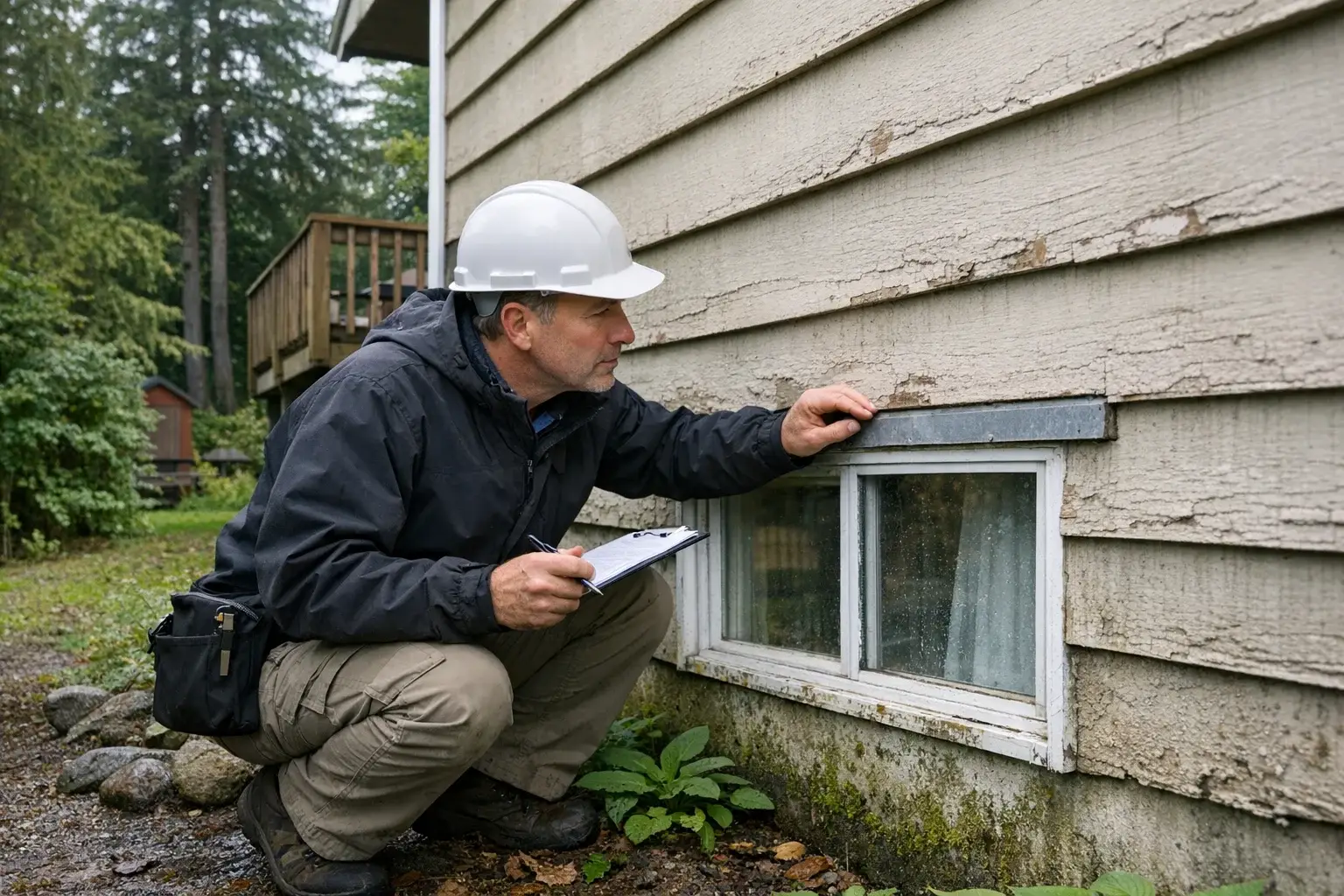
Quick answer: When inspecting an older BC home, focus on water control, electrical safety, plumbing, roof condition, heating and past changes. Age alone does not prove a defect. The goal is to spot visible concerns, understand repairs and decide when a qualified trade should check further.
Which electrical issues deserve closer review?
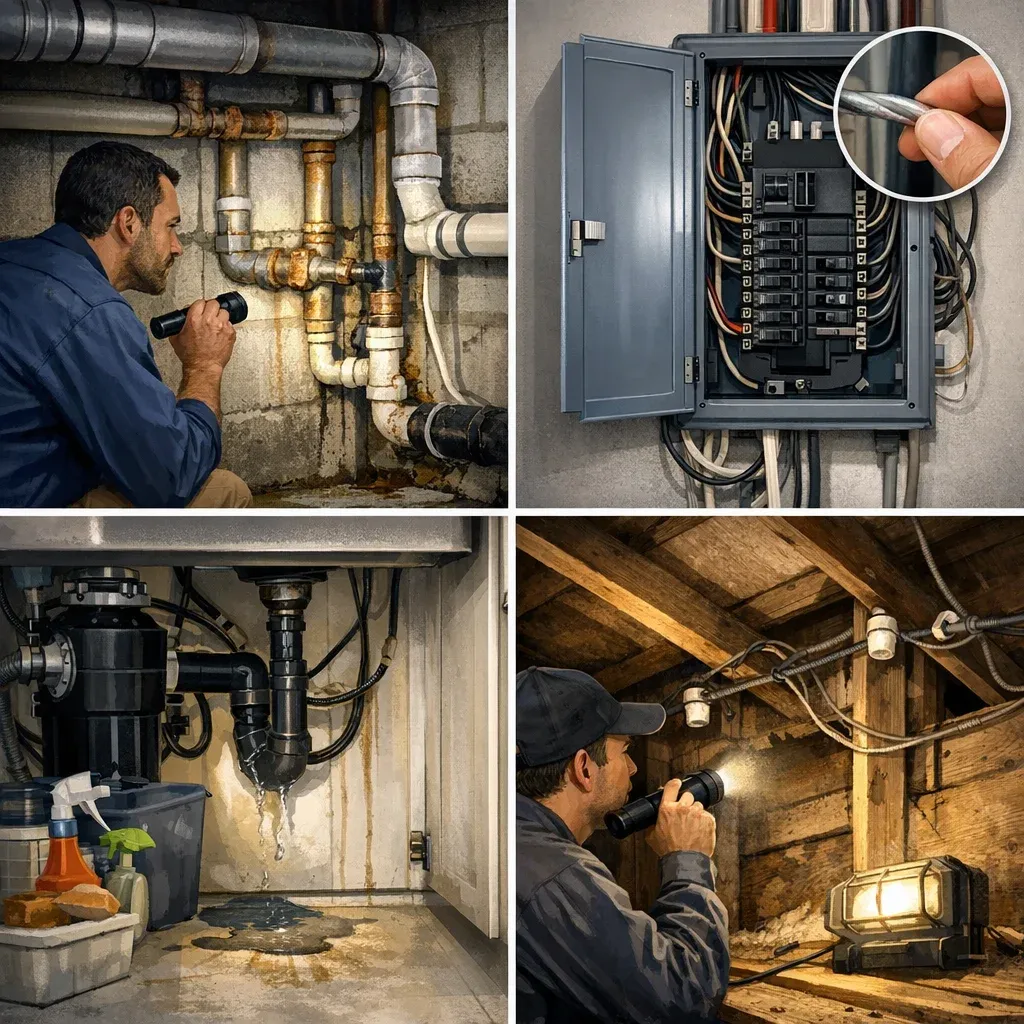
Visible aging equipment, unusual panel configurations, damaged outlets and signs of improvised alterations can warrant attention. An inspector may identify concerns, but testing concealed wiring or determining full system capacity requires a qualified electrical contractor.
Ask for renovation permits and electrical records where available. A fresh coat of paint does not reveal work behind the walls.
Why do plumbing materials and drains matter?
Older properties can contain different generations of supply lines, drains and fittings. Visible corrosion, leakage, unsupported pipes or an older piping material may prompt specialized review.
Buried sewer and perimeter drains are usually not fully assessable through a general visual inspection. For more detail, read the Poly-B piping guide.
How should buyers consider water management?
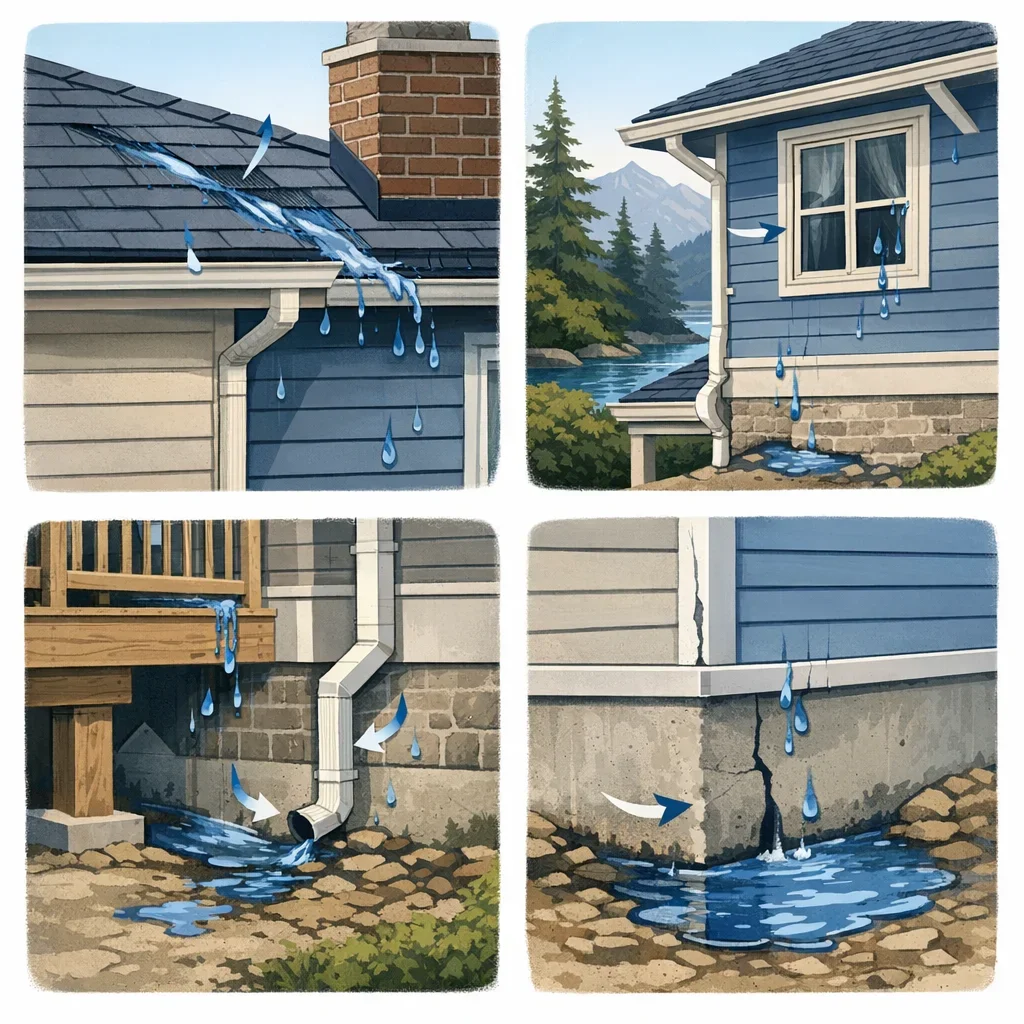
Observe accessible grading, gutters, roof drainage, foundation staining and evidence of water entry. A dry basement on the day of inspection does not guarantee there have been no past moisture problems.
Related topics include perimeter drainage warning signs and efflorescence and moisture ingress.
What about attic and ventilation conditions?
Visible roof framing, insulation distribution, attic ventilation openings and staining can provide useful context where access is safe. Older alterations may have changed airflow, insulation levels or heating requirements. Some deficiencies need building-science or roofing expertise.
Use what the property reveals: A general guide is a starting point. Decisions should be based on actual accessible conditions, the written inspection scope and relevant specialist advice.
How should you use an older-home report?
Prioritize safety and moisture concerns, then plan upgrades based on condition and independent trades advice. Request disclosures, invoices and documentation for major past work. A report is one part of due diligence, not a guarantee of what remains hidden.
For a specific home, book a buyer inspection or review Burnaby-specific older-home considerations.
What matters for BC homes?
Older homes in Vancouver, Burnaby or New Westminster may have been renovated in stages. A newer kitchen does not mean the wiring, drains or roof are new. In coastal BC, long wet seasons can test flashing and basement drainage. In colder areas, heat distribution, insulation and ice control can matter more.
Watch for places where renovations connect old materials with new work. Patch repairs around a foundation, altered joists or abandoned pipes can signal work worth asking about. A visual inspector may describe the evidence without knowing who performed it. Keep code and permit questions separate from the general inspection, and confirm them with the proper authority or qualified professional.
Example situation: how the issue can appear
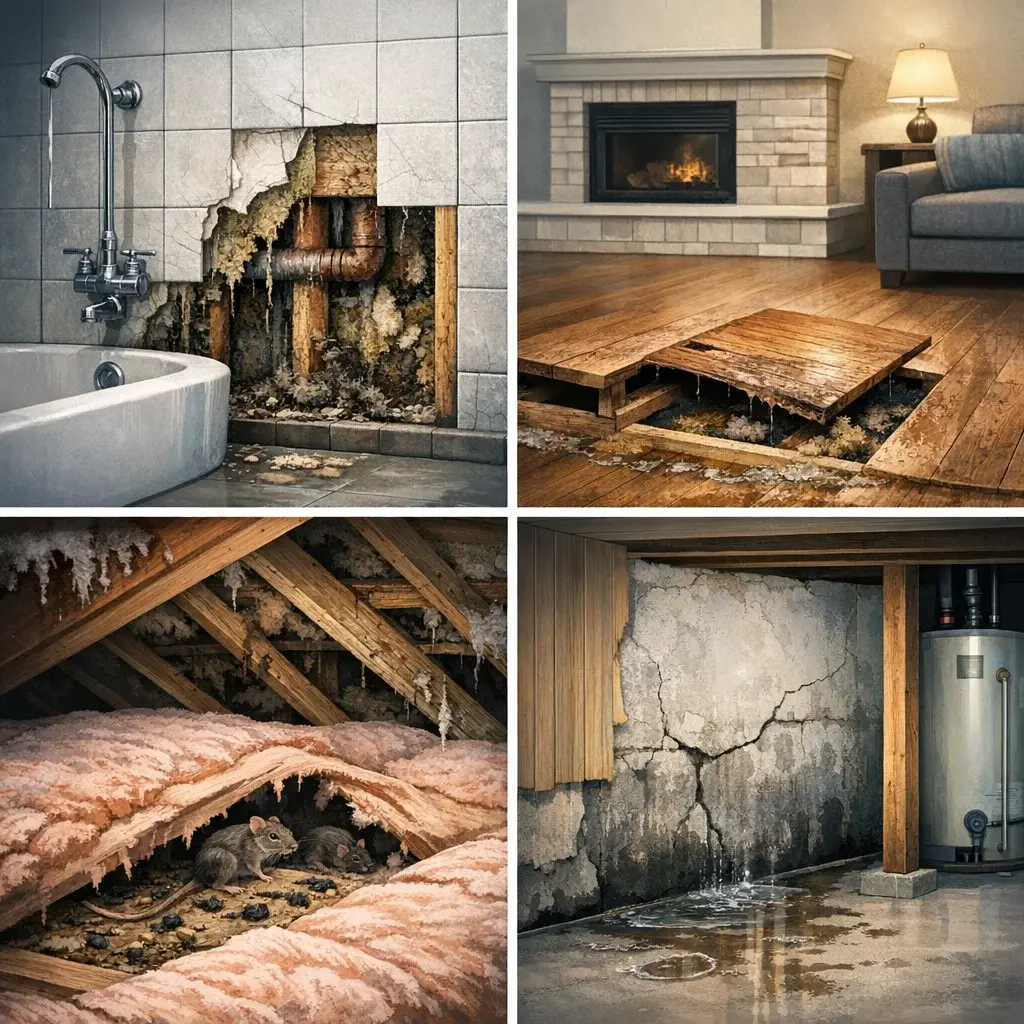
This is an illustrative example, not an actual client case. Imagine a 1960s home with a fresh basement suite. The new flooring looks clean, yet a storage-room wall shows white mineral staining. That might be an old dry mark or a sign of ongoing moisture. The source cannot be known from appearance alone.
How to make a sound decision
Try to compare visible conditions with documents. Request permits or receipts for major work when available. An inspector may see a mix of old and new materials but cannot verify the quality of every concealed renovation. If a system appears altered, ask an appropriate licensed contractor to review it.
A four-step checklist
- Ask for roof, furnace, plumbing and renovation records.
- Check accessible basement and attic spaces for water signs.
- Note panel and piping materials without touching unsafe components.
- Budget for specialist estimates on significant items.
Keep your notes simple: record the date, the part of the building, what you observed and who should answer the next question. Ask for written facts when you can. A home inspection is one piece of the decision, not a test that makes every risk disappear. If the cause is hidden or the work needs a specialist, get the right person to check it before relying on an estimate.
Key terms explained
- Service life
- The typical working period of a system, not a promise of when it will fail.
- Alteration
- A change made to an older component, room or building system.
- Visible evidence
- Signs that can be seen without taking the building apart.
What you should expect from a careful report
Look for clear photos, the exact location of each finding and plain words about why it matters. The inspector should state when an area was not seen. A note about a possible problem is not a final diagnosis. Review the written scope as well as the findings, then ask about safety, maintenance and work that may need a qualified professional. These steps help you avoid both undue worry and false confidence.
BC inspection experience and trustworthy sources
ENG Inspections is owned and operated by Nigel Greenidge. Nigel has worked with building and renovation projects for more than 20 years and has carried out home inspections since 2016. His listed Consumer Protection BC home inspector licence is #72615. He works directly with clients and uses photo-supported observations. This guide provides general education; it does not claim that Nigel personally inspected the example property.
To check the relevant provincial information, see Consumer Protection BC: Home inspections. Rules, deadlines and coverage should be checked against current official information and your own documents. The inspector can explain property conditions, but legal, engineering, insurance and warranty decisions may need other advisers.
Related BC guidance and services
For province-wide coverage, explore inspection service areas across BC. For deeper reading, compare Poly-B piping in BC, electrical safety for BC buyers, and common issues in older Burnaby homes. If you have a property deadline, discuss the agreed scope before you book.
Apply the guidance
Using This Advice for Your BC Property
Ask for roof, furnace, plumbing and renovation records. Note panel and piping materials without touching unsafe components. The right next step depends on the building, its records and what can be seen safely. For a property in British Columbia, ask about the agreed inspection scope and share any deadlines before arranging a visit.
For a specific home, compare buyer inspection services, BC home inspection service areas, or discuss the property with Nigel.
Frequently asked question
Frequently Asked Questions
Is every old component defective?
No. Age raises questions about wear and upgrades, but condition and performance need individual assessment.
What does service life mean?
The typical working period of a system, not a promise of when it will fail.
What should I do next about this issue?
Ask for roof, furnace, plumbing and renovation records. Budget for specialist estimates on significant items.
Need a property-specific review?
Discuss an Inspection With Nigel
If a property decision is approaching, share the address, property type, and deadline. ENG Inspections can discuss a suitable visual inspection scope and quote.