

Quick answer: what is a building envelope problem?
A building envelope is the barrier between a building and the outdoors. It includes exterior walls, windows, doors, roof elements, and their joints and seals. An envelope problem happens when these parts do not keep water and weather out or manage moisture as intended. For buyers, the main risk is damage that can develop out of sight.
Why the whole system matters
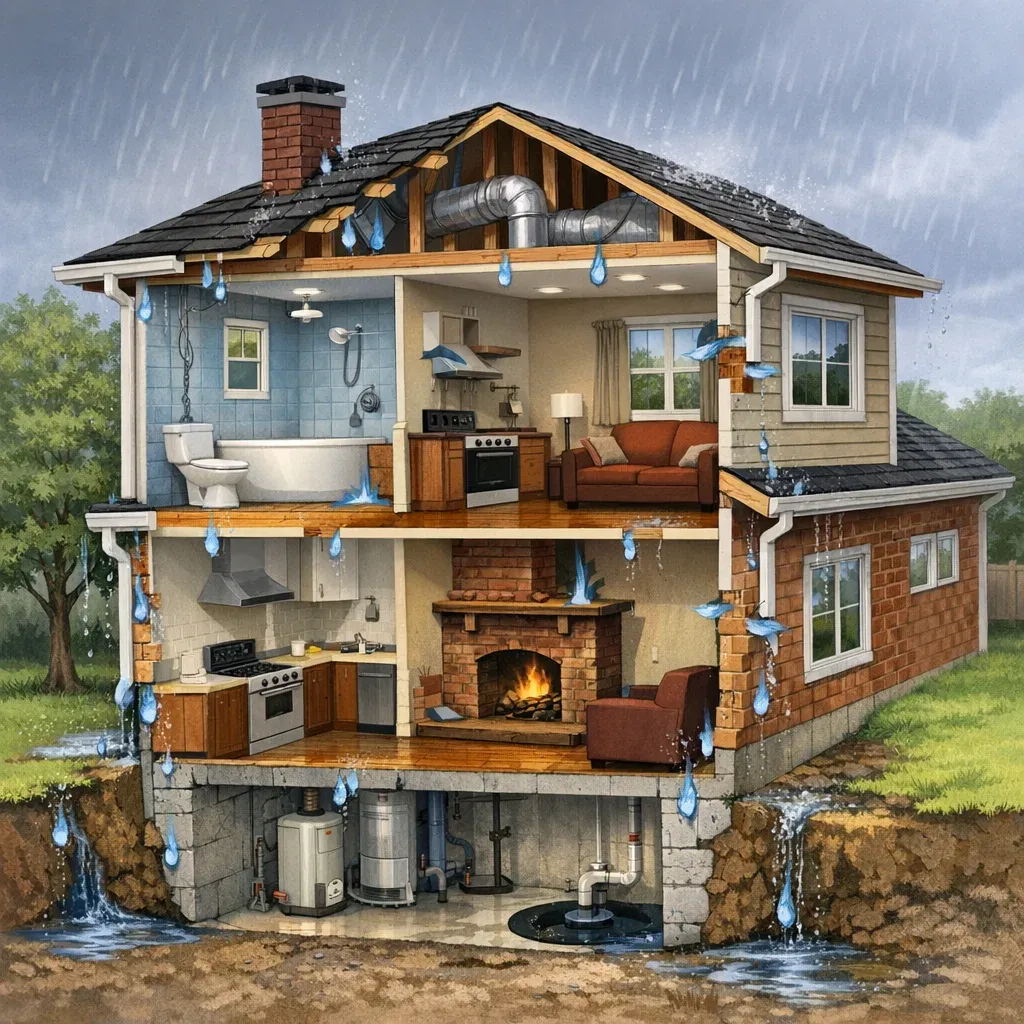
Rain does not need a huge crack to enter a home. Water can slip past a window corner or a poorly detailed balcony door, then travel behind cladding or into framing. Roof edges, flashing, sealants, drainage paths, and ventilation all work together. Replacing one window may not fix a wider wall detail.
Some assemblies are designed to shed most rain at the outside face, while a drainage cavity helps handle any water that gets past. People often call this a rain-screen system. A label like “rain-screened” is not a guarantee. Ask how the system was built, maintained, and repaired.

Common envelope clues during a showing
Look for soft or swollen trim, staining below windows, cracked or open caulking, water marks at balcony doors, peeling paint, or damp-smelling closets against exterior walls. Outside, note blocked drainage gaps, failing flashings, sealant gaps, or damage around roof-to-wall joints. Visible signs can be small even when the water path is complex. For roof-specific warning signs, see roof problems a home inspector may find.
No single mark proves a building-wide defect. New caulking is normal maintenance in some cases. A past leak might have been repaired. The key is to connect the sign with the age of the building, the repair history, and any expert reports.
Why condos need more than a unit inspection
A condo inspection can review reachable parts of the suite and any other areas agreed in the contract. It usually cannot take apart shared exterior walls or inspect every balcony membrane. Common-property responsibility varies with strata plans and bylaws, so check documents before assuming the owner or strata must pay. With attached homes, a townhouse inspection can also clarify accessible conditions and limits around shared components.
Request the latest depreciation report, envelope studies, minutes, budgets, insurance details, and records of completed repairs. Look for repeated leak complaints, testing programs, scaffolding work, and future levies. A building can have a clean-looking unit while the strata is planning expensive exterior work.
Understand the limits of a visual check
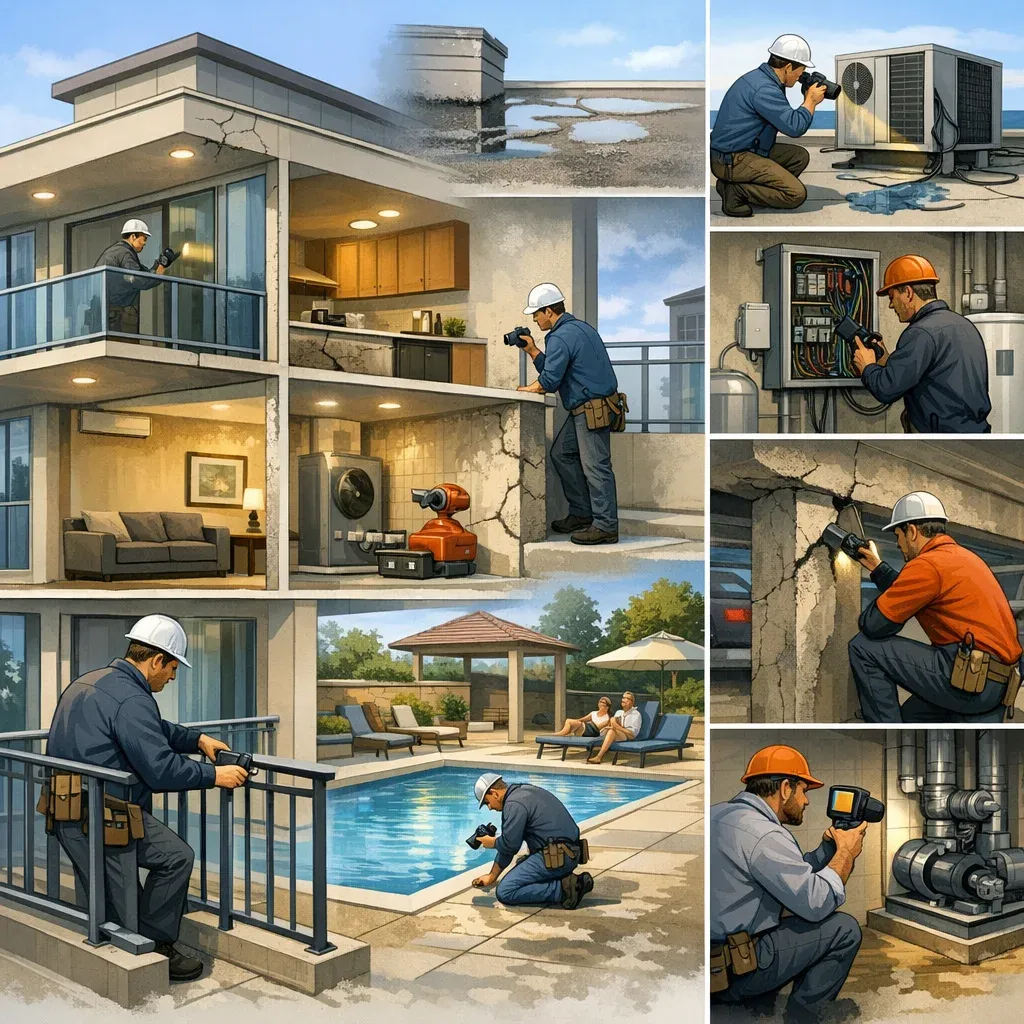
A home inspector may note visible staining, failed seals, or moisture clues and recommend expert review. They generally cannot confirm hidden rot without invasive work. A thermal camera may reveal unusual temperatures but cannot, by itself, say whether there is water or damage inside a wall.
Building-envelope consultants, engineers, and qualified contractors can use more detailed methods when needed. Some testing is invasive and requires owner or strata approval. Ask what each proposed test will answer. An expensive test is only useful when it helps resolve a real decision.
When warranty information matters
In BC, many eligible new homes have 2-5-10 home warranty insurance: minimum protection for certain labour and materials, the building envelope, and structure, each with its own terms and limits. Confirm the exact start date, provider, coverage, exclusions, and claim process for the property. A used condo may have remaining coverage, but the timing on shared areas can differ from the timing on a suite. For recently built properties, new-home and warranty inspections can help document visible conditions at key stages.
Warranty coverage is not a reason to skip due diligence. A warranty is a contract with conditions. Keep photos, dates, notices, and repair records if water entry is suspected.
What the repair question should include
Ask whether the leak source was found, not just whether a wall was painted. A complete plan may cover removal, drying, damaged materials, flashing details, drainage, testing, and follow-up checks. In strata buildings, ask how a project would be approved and funded.
Be cautious with broad claims such as “fully remediated” without documents. Request the scope, contractor, warranties, consultant sign-off where applicable, and any later complaints. If the repair touched only one suite, ask whether similar areas were reviewed.
BC buyer decision checklist
Before removing subjects, compare the home inspection with strata documents and seller records. Mark every water concern as explained, needs proof, or needs a specialist. Ask for missing information while your contract still gives you time to assess it. For a single-family house, focus on roof edges, windows, wall intersections, decks, grading, and maintenance records. For local availability and coverage, review Vancouver home inspection services.
Questions worth asking a building-envelope consultant
If the problem seems larger than a failed seal, ask for a clear scope before hiring a specialist. Will they review one leaking window, a group of balconies, or the full building? Will the work include moisture checks, drawings, opening finishes, or a written report? Who must approve access and testing?
Ask what evidence would change the diagnosis. For example, staining around one patio door could come from a local installation detail. Similar leaks on many floors may call for wider study. A professional should explain the level of confidence and what remains hidden.
In a strata, also ask how findings will be shared with council and who will plan repairs. The inspection can reveal an issue; the decision also involves ownership, building records, funding, and a safe repair path.

Bottom line
An envelope concern is rarely solved by looking at paint alone. Buyers should ask where water enters, what lies behind the surface, who pays, and what proof shows the repair worked. For a broader view of home inspection services in the Lower Mainland, visit ENG Inspections.
Frequently asked questions
What does a home inspector check on an exterior wall?
A visual inspection can note accessible cladding, sealants, flashing, staining, damage, and drainage clues within the contract scope. Hidden assemblies usually need a specialist.
Does rain-screen construction mean no leak risk?
No. A drainage cavity can help manage rain, but windows, joints, maintenance, and workmanship still matter.
Who pays to repair a condo building envelope?
Responsibility depends on the strata plan, bylaws, insurance, and the nature of the work. Ask a qualified strata adviser or lawyer about the specific building.
Is a building envelope covered by BC new-home warranty?
Eligible homes generally have minimum five-year envelope coverage, subject to policy terms and dates. Verify coverage for that property and affected component.
Sources and further reading
Official sources support the regulatory and buying-process information above. This article is general education, not a property assessment, legal advice, or a warranty promise.