
BC property inspection guide
Older Burnaby Homes: Common Inspection Issues
Older Burnaby homes may have original building systems alongside newer renovations. Buyers should ask about visible signs of water entry, drainage, roofing, electrical work and permits where relevant. Each property needs its own inspection.
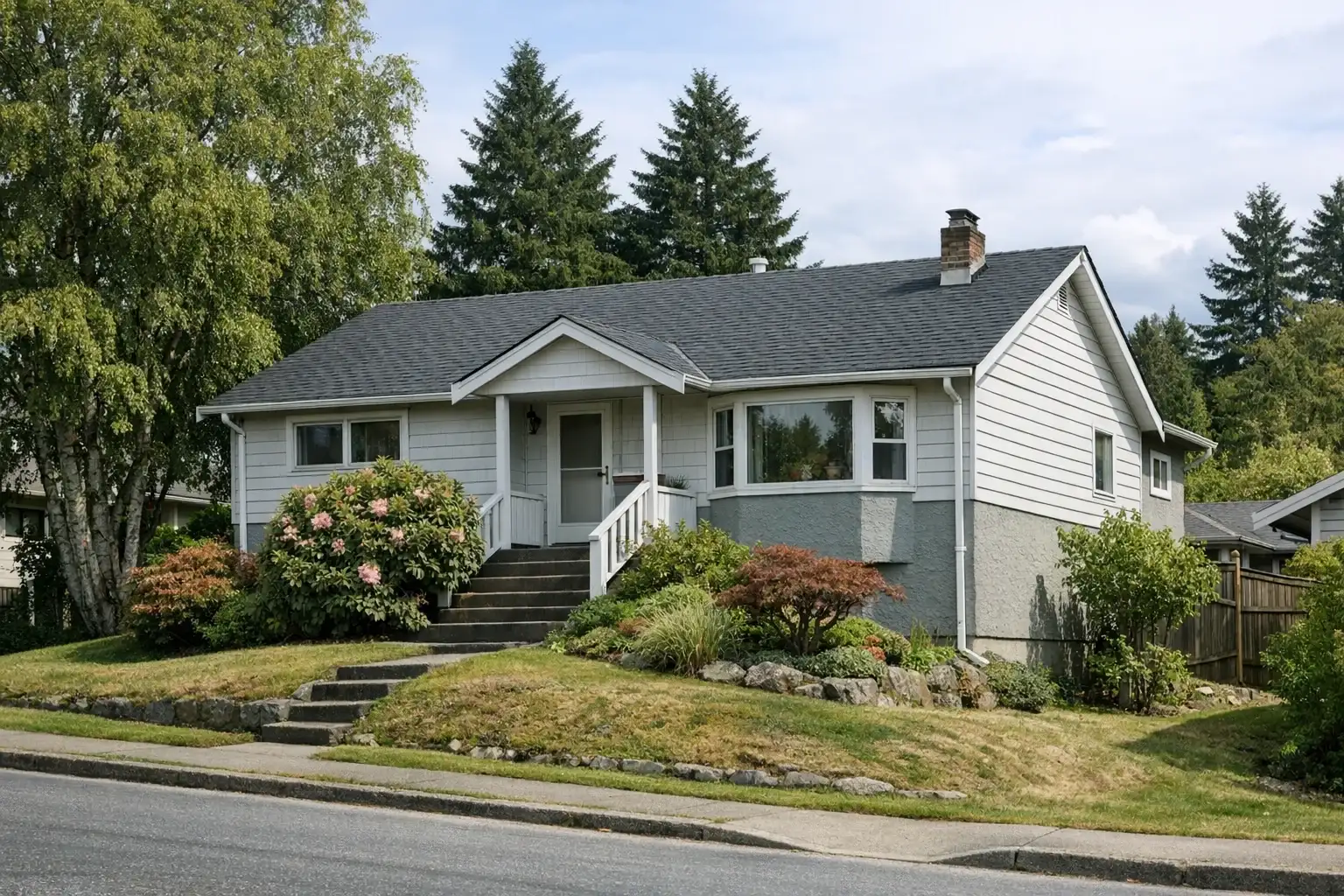
Quick answer: Older Burnaby homes can present visible concerns with drainage, roofing, electrical work and previous renovations. Each house is different. A home inspection helps buyers separate normal wear from items that may need a contractor, further testing or a planned repair budget.
Why are older Burnaby homes not all alike?
North Burnaby, South Burnaby and other established areas include houses built and altered at different times. Additions, basement finishing and previous repairs can change what is accessible during an inspection.
The property's records and observable condition matter more than assuming every home of a similar age has the same defects.
What visible drainage and moisture signs matter?
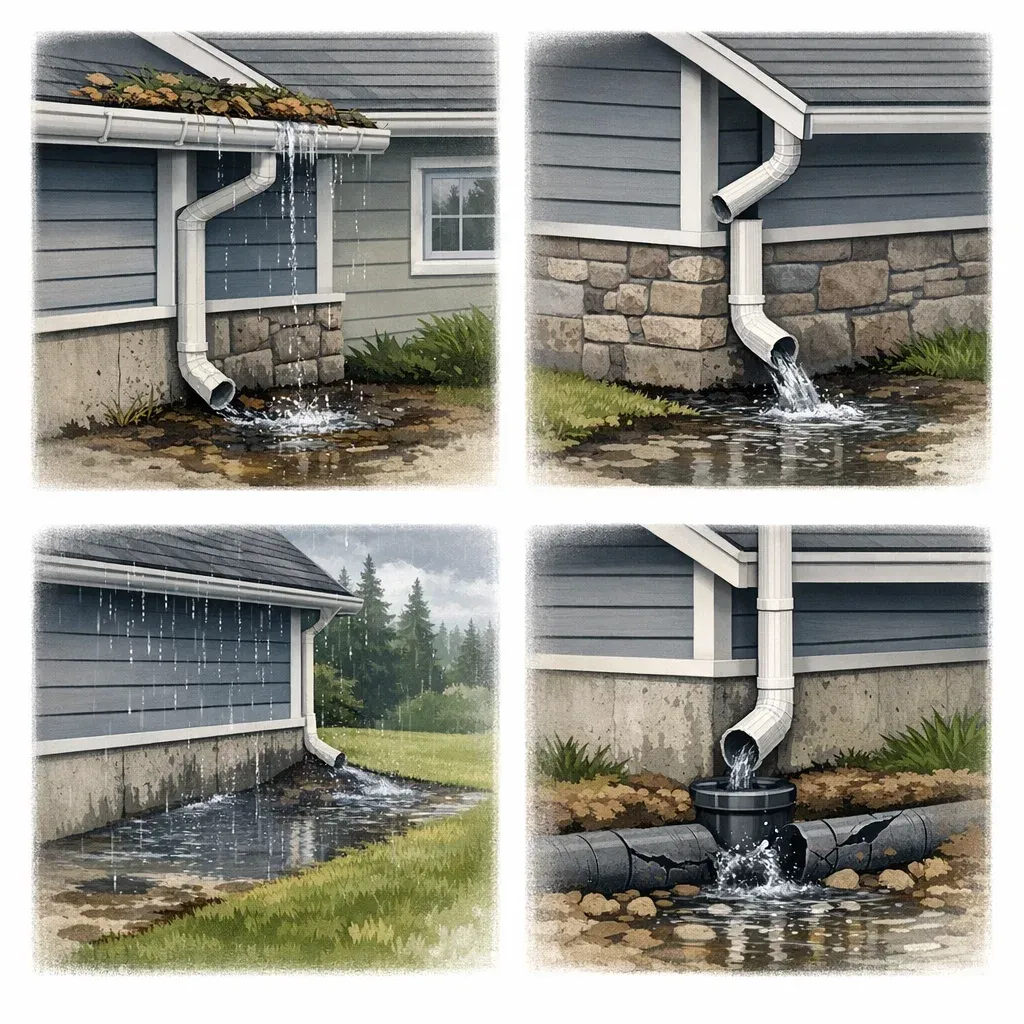
An inspector may note poor surface grading, blocked roof drainage, foundation staining, efflorescence or signs of prior leakage. These observations justify questions, not a definitive diagnosis of underground drainage performance.
Learn how drainage failure symptoms can relate to a broader investigation.
What electrical and plumbing concerns can arise?
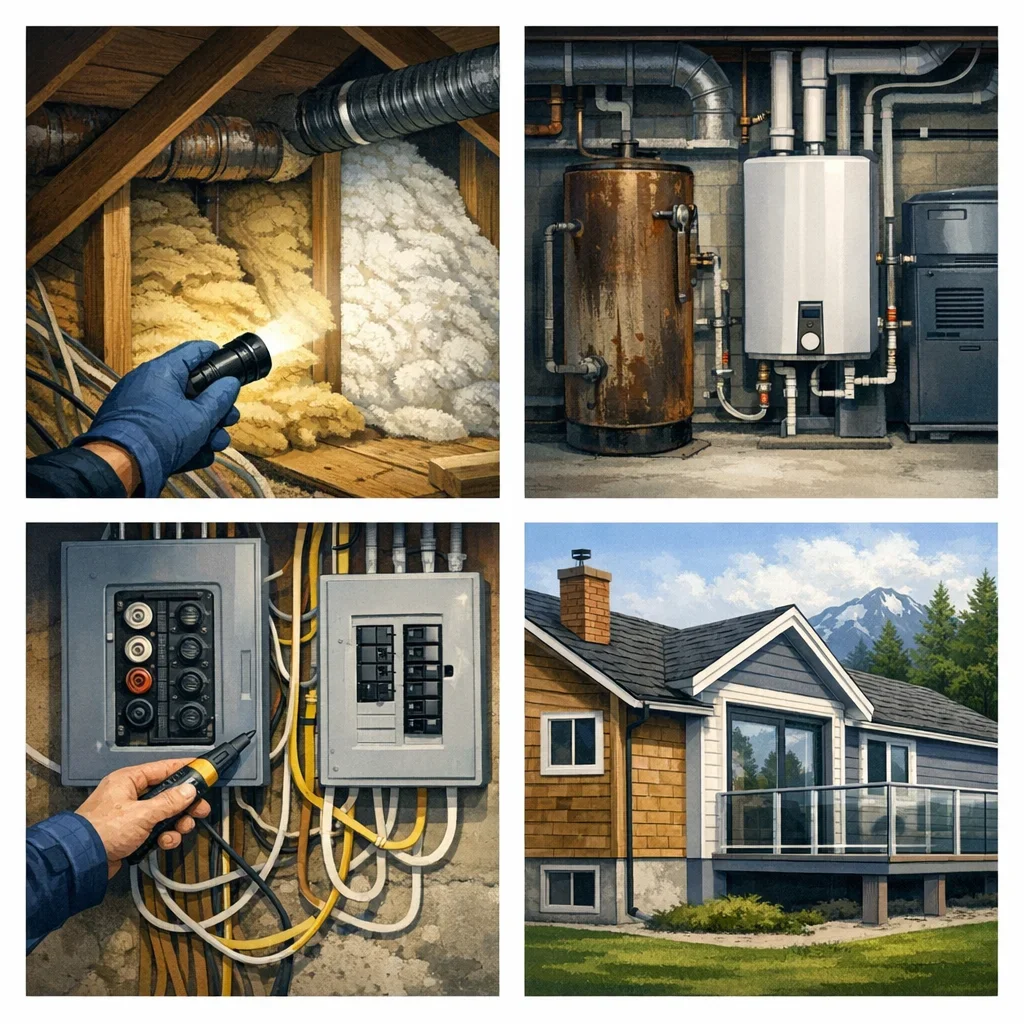
Different renovation eras may leave a blend of materials and equipment. Accessible connections, older panels, water-supply piping and visible drains can suggest when an electrician or plumber should assess a specific issue.
Concealed systems and permit compliance cannot be fully determined by a general inspection.
How should roof and attic findings be handled?
Roof covering, flashing, ventilation and attic staining should be assessed together when safe access permits. A recently replaced roof covering does not automatically mean flashing, drainage and attic conditions are satisfactory.
See common visible roofing concerns for examples.
Use what the property reveals: A general guide is a starting point. Decisions should be based on actual accessible conditions, the written inspection scope and relevant specialist advice.
What next steps help a Burnaby buyer?
Ask about major upgrades and keep the inspection report alongside permits or contractor invoices when available. If significant concerns appear, arrange the appropriate specialist and consider the timeline before making a contractual decision.
For the local service area, see Burnaby home inspections; the broader systems guide covers older BC homes.
What matters for BC homes?
Burnaby includes established detached-home streets in North Burnaby and South Burnaby, as well as newer strata homes near major town centres. A raised lot, basement entry or older retaining wall can change how water reaches the structure. Local topography and site changes matter more than the neighbourhood name alone.
One Burnaby property can sit near a ridge while another has low ground or a basement partly below grade. The inspector should look at the actual drainage paths, not rely on a neighbourhood stereotype. Ask whether additions, retaining walls or basement suites changed site drainage. A building with decades of service may be well maintained, but records and accessible conditions should support that conclusion.
Example situation: how the issue can appear
This is an illustrative example, not an actual client case. Consider an older house near a sloping Burnaby street. Water from a driveway may flow toward a garage in heavy rain. If the concrete shows staining, the right next step is to assess surface flow and any drainage system, not to guess that the foundation has failed.
How to make a sound decision
Do not assume that a finished basement is dry or that an updated bathroom means all drains were replaced. Look for clues that water has been managed well: correct grading, functioning gutters, clear downspouts and dry accessible interior surfaces. Ask who completed major changes and whether records are available.
A four-step checklist
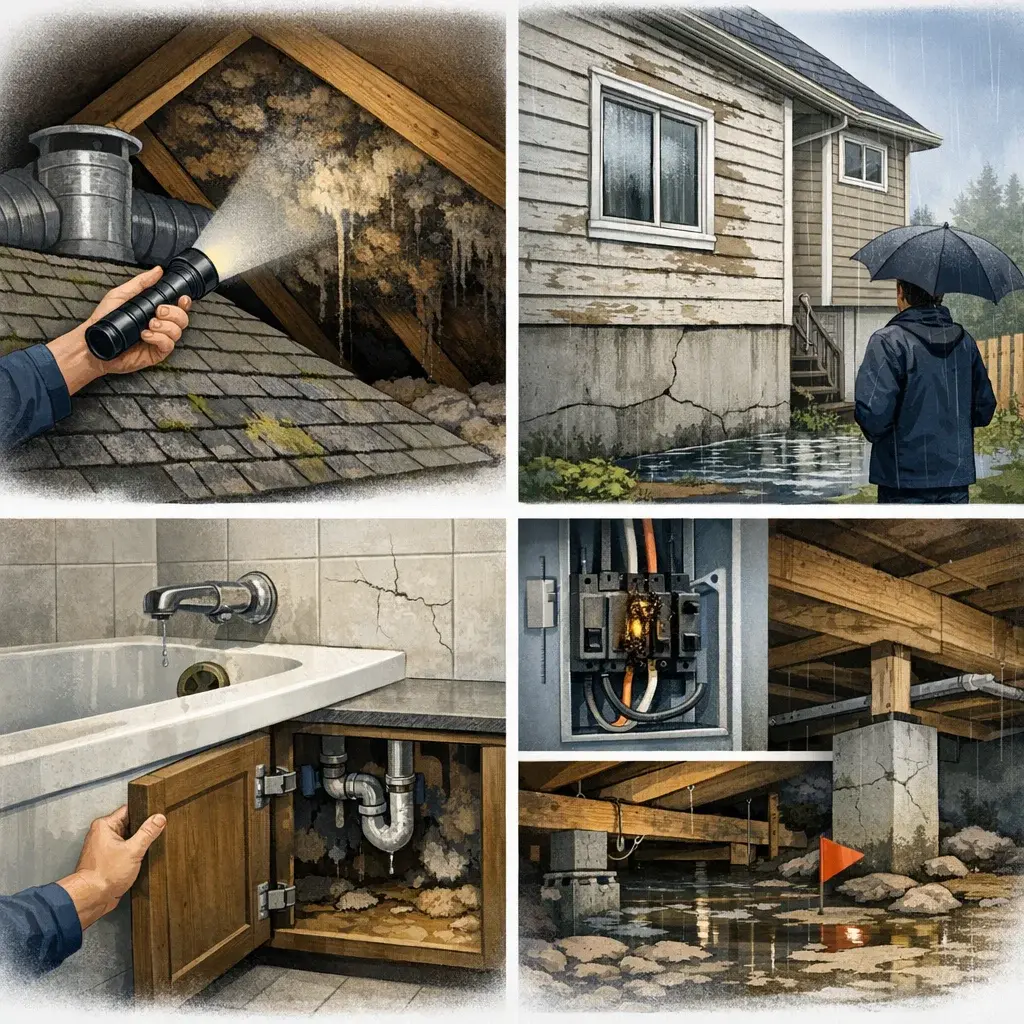
- Check past roof, drainage and foundation repair records.
- Ask whether basement spaces have had water entry.
- Review accessible wiring and plumbing changes.
- Get a qualified trade's opinion on major concerns.
Keep your notes simple: record the date, the part of the building, what you observed and who should answer the next question. Ask for written facts when you can. A home inspection is one piece of the decision, not a test that makes every risk disappear. If the cause is hidden or the work needs a specialist, get the right person to check it before relying on an estimate.
Key terms explained
- Site grading
- The slope of the land that helps move rainwater away from structures.
- Retaining wall
- A wall intended to hold soil at a change in ground level.
- Renovation record
- A permit, invoice or other document showing what work was done.
What you should expect from a careful report
Look for clear photos, the exact location of each finding and plain words about why it matters. The inspector should state when an area was not seen. A note about a possible problem is not a final diagnosis. Review the written scope as well as the findings, then ask about safety, maintenance and work that may need a qualified professional. These steps help you avoid both undue worry and false confidence.
BC inspection experience and trustworthy sources
ENG Inspections is owned and operated by Nigel Greenidge. Nigel has worked with building and renovation projects for more than 20 years and has carried out home inspections since 2016. His listed Consumer Protection BC home inspector licence is #72615. He works directly with clients and uses photo-supported observations. This guide provides general education; it does not claim that Nigel personally inspected the example property.
To check the relevant provincial information, see Consumer Protection BC: Home inspections. Rules, deadlines and coverage should be checked against current official information and your own documents. The inspector can explain property conditions, but legal, engineering, insurance and warranty decisions may need other advisers.
Related BC guidance and services
For province-wide coverage, explore inspection service areas across BC. For deeper reading, compare home inspections in Burnaby, visible perimeter drainage warning signs, and inspecting an older BC home. If you have a property deadline, discuss the agreed scope before you book.
Apply the guidance
Using This Advice for Your BC Property
Check past roof, drainage and foundation repair records. Review accessible wiring and plumbing changes. The right next step depends on the building, its records and what can be seen safely. For a property in British Columbia, ask about the agreed inspection scope and share any deadlines before arranging a visit.
For a specific home, compare buyer inspection services, BC home inspection service areas, or discuss the property with Nigel.
Frequently asked question
Frequently Asked Questions
Should I avoid every older house?
No. The decision should reflect observed condition, repair history, your budget and professional advice, not age alone.
What does site grading mean?
The slope of the land that helps move rainwater away from structures.
What should I do next about this issue?
Check past roof, drainage and foundation repair records. Get a qualified trade's opinion on major concerns.
Need a property-specific review?
Discuss an Inspection With Nigel
If a property decision is approaching, share the address, property type, and deadline. ENG Inspections can discuss a suitable visual inspection scope and quote.