
BC property inspection guide
Building Envelope Issues in BC: Warning Signs
Building envelope issues in BC can affect how a home keeps out rain, wind and moisture. Look for visible signs near windows, siding, balconies and roof edges. A visual inspection can raise questions, but hidden damage needs further assessment.

Quick answer: The building envelope keeps outside water and weather away from interior spaces. It includes roofs, walls, windows, doors, flashings and connections between them. In BC, visible stains, failed seals or damaged cladding can justify closer review, but the exact water path may be hidden.
What is included in a building envelope?
The term generally includes exterior wall assemblies, roof systems, windows, doors, flashing and the interfaces between them. The visible surfaces only tell part of the story; concealed membranes and layers may be inaccessible without specialized investigation.
What are visible warning signs?
Staining near window corners, deteriorated sealant, damaged cladding, surface cracks and signs of repeated patching may justify questions. A single sign does not establish a building-wide failure.
See moisture ingress and efflorescence for related observations.

Why are strata records important?
In condominium buildings, significant exterior repair work may involve common property and collective decisions. Engineering reports, strata minutes and depreciation information can explain known projects that a unit inspection cannot fully evaluate.
Compare what the unit inspection and strata records each show.
When is a specialist needed?
If visible evidence or documented history suggests significant water intrusion, an enclosure consultant, engineer or qualified contractor may need to investigate. Selective intrusive testing may be necessary and requires authorization.
A standard home inspection cannot prove that concealed envelope assemblies are sound.
Use what the property reveals: A general guide is a starting point. Decisions should be based on actual accessible conditions, the written inspection scope and relevant specialist advice.
What should a BC buyer ask?
- Have there been leaks or building-envelope studies?
- What repairs were completed and by whom?
- Are there remaining deficiencies or warranty matters?
- What upcoming projects affect strata fees or special levies?
- Were water-damaged materials properly assessed and repaired?
For a specific unit, see condo inspections.
What matters for BC homes?
Coastal rain and wind can test wall joints, balconies and window details. In other BC regions, freeze-thaw cycles and snow can stress exposed finishes. Strata buildings add shared ownership questions: exterior repairs may be the strata's responsibility, while a unit owner may only see the first interior clue.

Exterior water-control layers can be hidden behind cladding. A visually clean wall therefore does not prove that the weather barrier or flashing was installed well. Repair history matters: find out what was fixed, who reviewed it and whether new leaks appeared. In a strata, ask which parts are common property and whether special levies or building-envelope reports have been discussed.
Example situation: how the issue can appear
This is an illustrative example, not an actual client case. Consider a condo with a stained window sill. The seller says it happened once, yet strata minutes record repeated leak reviews on the same elevation. Both facts need follow-up. A qualified consultant may be needed to confirm the source and repair plan.
How to make a sound decision
Check whether an issue is isolated or part of a repeated pattern. A single stain may have a simple source. Several units reporting similar leaks may call for a building-envelope consultant or engineer and review of past strata repairs. Do not treat a visual home inspection as a complete envelope assessment.
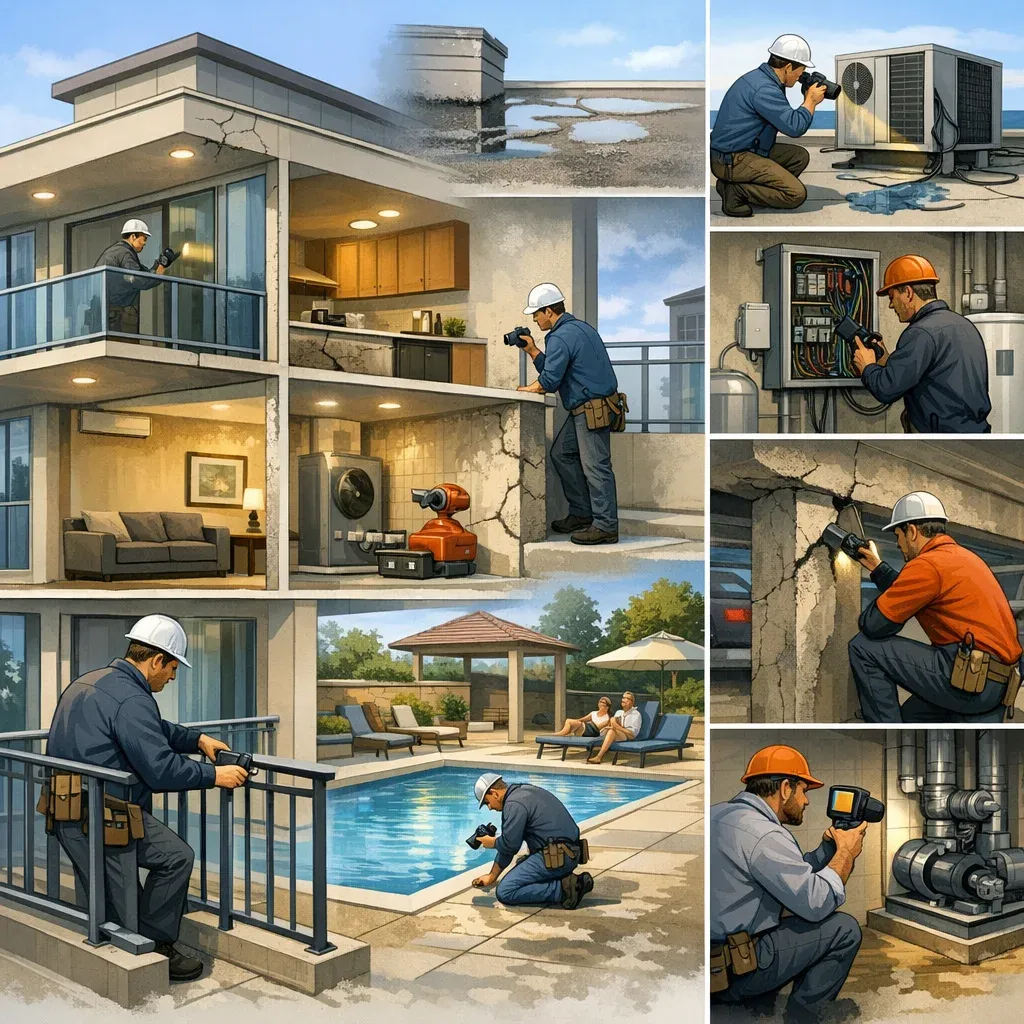
A four-step checklist
- Look for staining around windows, balconies and roof-wall joints.
- Ask for past repairs, warranties and moisture investigations.
- Review strata minutes when shared walls are involved.
- Seek a qualified building-envelope specialist for persistent or widespread issues.
Keep your notes simple: record the date, the part of the building, what you observed and who should answer the next question. Ask for written facts when you can. A home inspection is one piece of the decision, not a test that makes every risk disappear. If the cause is hidden or the work needs a specialist, get the right person to check it before relying on an estimate.
Key terms explained
- Flashing
- A detail meant to direct water away from joints and openings.
- Cladding
- The outer layer of a wall, such as siding or masonry.
- Membrane
- A hidden or visible layer used to control water movement.
What you should expect from a careful report
Look for clear photos, the exact location of each finding and plain words about why it matters. The inspector should state when an area was not seen. A note about a possible problem is not a final diagnosis. Review the written scope as well as the findings, then ask about safety, maintenance and work that may need a qualified professional. These steps help you avoid both undue worry and false confidence.
BC inspection experience and trustworthy sources
ENG Inspections is owned and operated by Nigel Greenidge. Nigel has worked with building and renovation projects for more than 20 years and has carried out home inspections since 2016. His listed Consumer Protection BC home inspector licence is #72615. He works directly with clients and uses photo-supported observations. This guide provides general education; it does not claim that Nigel personally inspected the example property.
To check the relevant provincial information, see BC government: Strata depreciation report requirements. Rules, deadlines and coverage should be checked against current official information and your own documents. The inspector can explain property conditions, but legal, engineering, insurance and warranty decisions may need other advisers.
Related BC guidance and services
For province-wide coverage, explore inspection service areas across BC. For deeper reading, compare moisture ingress and efflorescence, condo inspections versus strata records, and condo inspection services. If you have a property deadline, discuss the agreed scope before you book.
Apply the guidance
Using This Advice for Your BC Property
Look for staining around windows, balconies and roof-wall joints. Review strata minutes when shared walls are involved. The right next step depends on the building, its records and what can be seen safely. For a property in British Columbia, ask about the agreed inspection scope and share any deadlines before arranging a visit.
For a specific home, compare buyer inspection services, BC home inspection service areas, or discuss the property with Nigel.

Frequently asked question
Frequently Asked Questions
Can a home inspection certify a whole condo building envelope?
No. Building-wide assessment normally requires a separately scoped specialist engagement.
What does flashing mean?
A detail meant to direct water away from joints and openings.
What should I do next about this issue?
Look for staining around windows, balconies and roof-wall joints. Seek a qualified building-envelope specialist for persistent or widespread issues.
Need a property-specific review?
Discuss an Inspection With Nigel
If a property decision is approaching, share the address, property type, and deadline. ENG Inspections can discuss a suitable visual inspection scope and quote.