
BC property inspection guide
BC Home Inspection: What Does an Inspector Check?
A BC home inspection reviews the visible and safe-to-reach parts of a property. The inspector looks at items like the roof, exterior, plumbing, heating and electrical systems. The report helps buyers see concerns and decide what to check next.
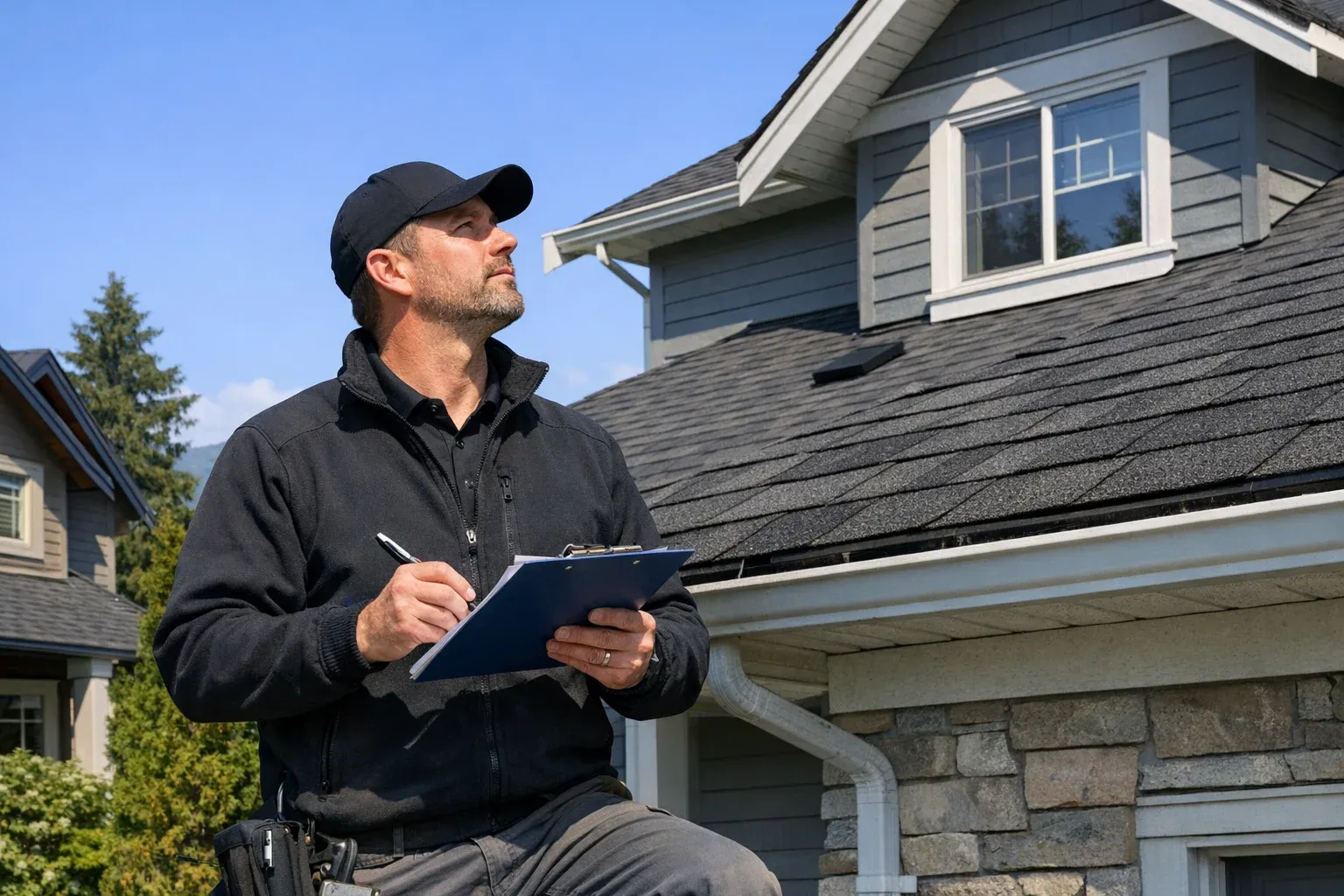
Quick answer: A BC home inspector checks the parts of a home that can be reached and seen safely. This may include the roof, foundation, drainage, electrical system, plumbing, heat, attic and rooms. The inspector records signs of trouble but cannot promise that hidden areas have no defects.
Which exterior components are reviewed?
Within the agreed scope and safe access, an inspector observes exterior cladding, openings, decks, visible foundations, site grading and drainage. Roof covering, flashing and gutters may be reviewed from accessible vantage points. Wet weather, height and roof condition can restrict direct access.
The objective is to describe visible conditions, not to dismantle assemblies or guarantee the building envelope is watertight.
Which interior and mechanical systems are included?
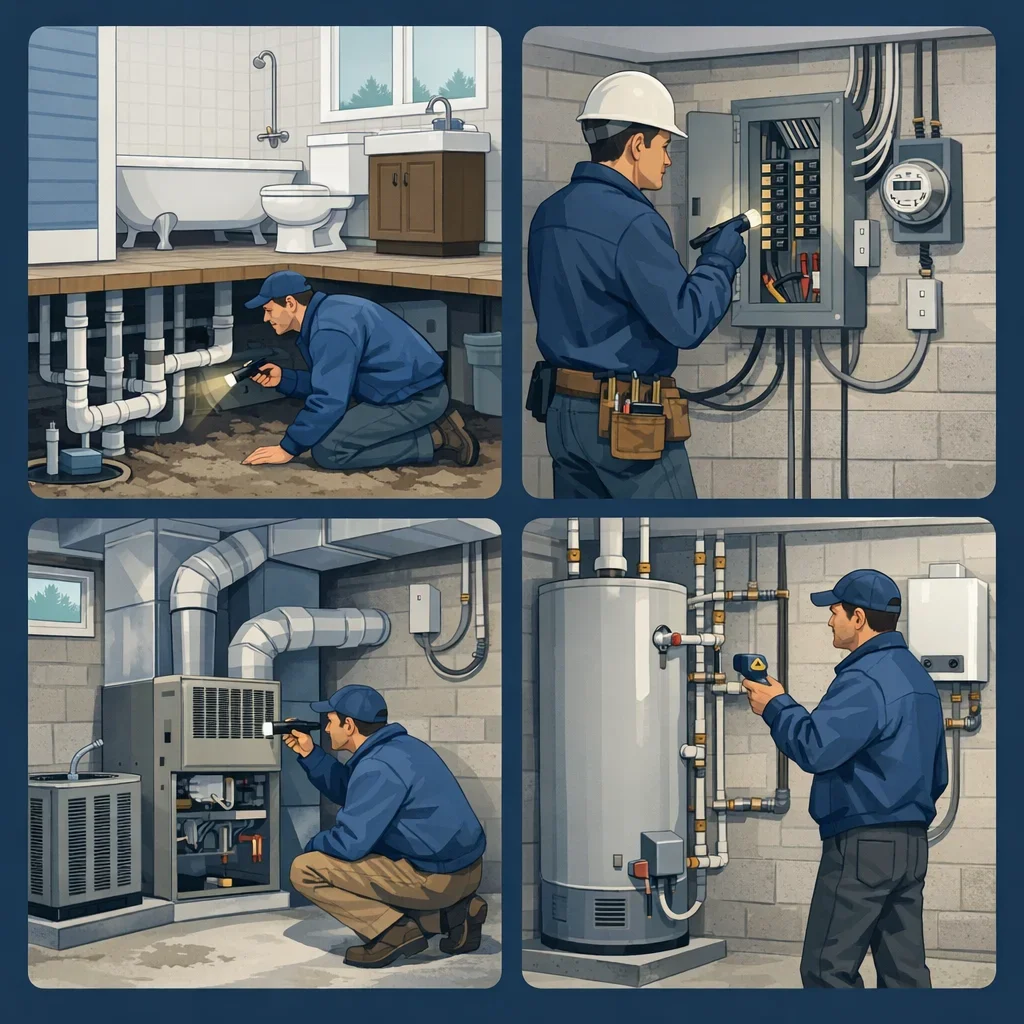
A typical residential inspection evaluates accessible areas associated with these building systems:
- Electrical service components, visible wiring concerns and representative outlets or fixtures.
- Plumbing fixtures, visible supply and drain piping, water heaters and signs of leakage.
- Heating and ventilation components that can be observed or operated safely.
- Interior walls, ceilings, floors, stairs, windows, doors and moisture indicators.
- Accessible attic, insulation, ventilation and crawlspace features where entry is safe.

How are findings documented?
A report connects specific observations to photos, explains their potential significance and notes when corrective work or further evaluation may be prudent. Some conditions are ordinary maintenance; others need prompt attention.
A report is a snapshot of observable conditions on the inspection date. See how home inspection reports work.
What is outside a standard visual inspection?
An inspector normally cannot see sealed cavities, diagnose every hidden leak, test hazardous materials or certify every appliance, system or code requirement. Specialist testing and invasive investigation require separate arrangements.
The separate guide to home inspection exclusions and limitations explains this in greater detail.
Use what the property reveals: A general guide is a starting point. Decisions should be based on actual accessible conditions, the written inspection scope and relevant specialist advice.
How should a BC buyer prepare?
Confirm your subject deadline, property access and scope with the inspector. Read the agreement before the appointment and allow time for questions after receiving the written report.
For a property-specific service, review pre-purchase inspections or the BC service areas.
What matters for BC homes?
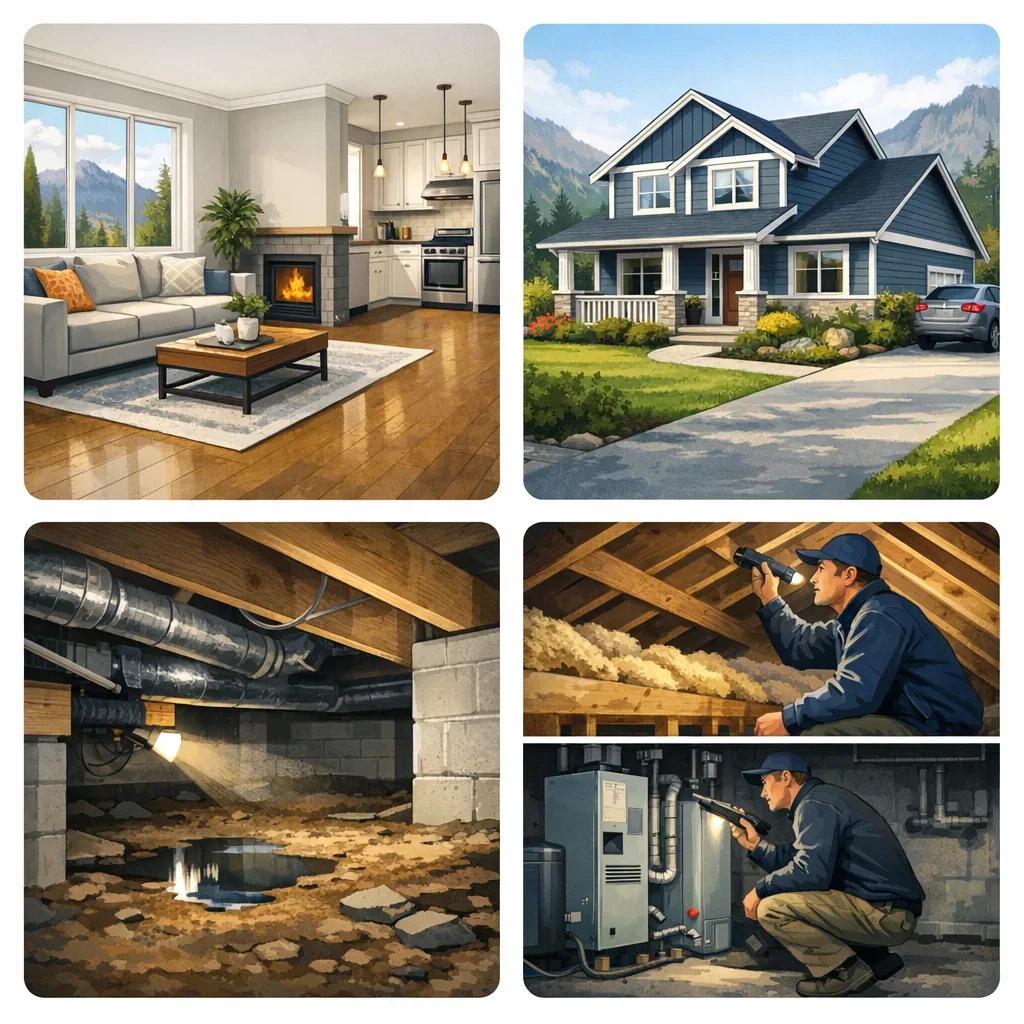
BC homes face different conditions from place to place. A coastal home may need close attention to rainwater control and damp areas. An Interior home may bring questions about snow loads, roof drainage and heating. A strata condo calls for a unit inspection plus a review of shared-building records. The same checklist will not tell the full story for every building.
Roof surfaces are not always safe to walk. A steep roof may be viewed from a ladder or ground-level position. An attic may be blocked by stored items, and a crawlspace may have standing water. These limits belong in the report. Ask which components were tested, which were only observed and which were not accessible. Do not assume a system works simply because the inspector did not report a defect.
Example situation: how the issue can appear
This is an illustrative example, not an actual client case. Picture a buyer comparing a newer townhouse with a 1970s detached home. The townhouse may have shared roofs or walls managed by a strata. The older house may have aging wiring, a crawlspace and a sloped yard. Both need an inspection, but the questions and documents are different.
How to make a sound decision
Ask what areas were visible, what was not entered and why. A photo of a damp stain does not tell you where the water came from. A loose railing may need repair, while an unusual crack may need a structural engineer. A useful report separates facts from possible causes and says when another trade should take a closer look.
A four-step checklist
- Ask for a written inspection scope before the visit.
- Arrange safe access to the attic, crawlspace, service panels and other agreed areas.
- Bring questions about leaks, past repairs and renovations.
- Read the full report, including access limits and recommended follow-up.
Keep your notes simple: record the date, the part of the building, what you observed and who should answer the next question. Ask for written facts when you can. A home inspection is one piece of the decision, not a test that makes every risk disappear. If the cause is hidden or the work needs a specialist, get the right person to check it before relying on an estimate.
Key terms explained
- Visible condition
- A condition the inspector can observe without opening or damaging the building.
- Scope
- The systems and accessible spaces that the inspection agreement covers.
- Further evaluation
- A closer review by the right trade or specialist when the cause is unknown.
What you should expect from a careful report
Look for clear photos, the exact location of each finding and plain words about why it matters. The inspector should state when an area was not seen. A note about a possible problem is not a final diagnosis. Review the written scope as well as the findings, then ask about safety, maintenance and work that may need a qualified professional. These steps help you avoid both undue worry and false confidence.
BC inspection experience and trustworthy sources
ENG Inspections is owned and operated by Nigel Greenidge. Nigel has worked with building and renovation projects for more than 20 years and has carried out home inspections since 2016. His listed Consumer Protection BC home inspector licence is #72615. He works directly with clients and uses photo-supported observations. This guide provides general education; it does not claim that Nigel personally inspected the example property.
To check the relevant provincial information, see Consumer Protection BC: Home inspections. Rules, deadlines and coverage should be checked against current official information and your own documents. The inspector can explain property conditions, but legal, engineering, insurance and warranty decisions may need other advisers.
Related BC guidance and services
For province-wide coverage, explore inspection service areas across BC. For deeper reading, compare pre-purchase home inspection services, what a BC home inspection does not cover, and how to read a home inspection report. If you have a property deadline, discuss the agreed scope before you book.
Apply the guidance
Using This Advice for Your BC Property
Ask for a written inspection scope before the visit. Bring questions about leaks, past repairs and renovations. The right next step depends on the building, its records and what can be seen safely. For a property in British Columbia, ask about the agreed inspection scope and share any deadlines before arranging a visit.
For a specific home, compare buyer inspection services, BC home inspection service areas, or discuss the property with Nigel.
Frequently asked question
Frequently Asked Questions
Will the inspection find every defect?
No. Hidden or inaccessible conditions can remain unknown even after a careful visual inspection.
Is a home inspection the same as a code inspection?
No. A general home inspection documents visible conditions rather than providing a comprehensive code compliance certification.
What does visible condition mean?
A condition the inspector can observe without opening or damaging the building.
What should I do next about this issue?
Ask for a written inspection scope before the visit. Read the full report, including access limits and recommended follow-up.
Need a property-specific review?
Discuss an Inspection With Nigel
If a property decision is approaching, share the address, property type, and deadline. ENG Inspections can discuss a suitable visual inspection scope and quote.