

Quick answer: what should you do next?
If a home inspection finds a major problem, read the exact finding, ask what is known and unknown, and get the right specialist when needed. Then review the possible cost, safety, timing, and contract options with your real estate professional or lawyer. An inspection finding is not an automatic command to walk away, and it is not a guarantee that a seller must repair it.
First, separate facts from guesses
The inspection report may say “active moisture staining near the basement wall” rather than “failed perimeter drain.” That wording matters. The first statement describes an observation; the second suggests a cause that may require testing. Ask the inspector to explain the concern, how it was found, and what would clarify it.
Request photos, location details, and an explanation of any inspection limits. If you attended the inspection, use your notes to ask better questions, but rely on the written report for the record. In BC, licensed home inspectors must provide the written report by the date in their contract.

Sort the findings by urgency
Place findings into three practical groups: immediate safety, possible major cost or damage, and routine maintenance. Examples of urgent concerns may include signs of unsafe electrical conditions or active water near electrical equipment. A large roof leak, serious foundation movement, or major plumbing leak may need prompt specialist review and repair planning. Where useful, thermal imaging and moisture detection can support an inspection observation but cannot confirm concealed defects on their own.
Do not treat every note in the report as equal. Small caulking defects are common maintenance, while unexplained structural movement deserves more attention. Ask the inspector which findings they recommend sending to qualified trades or engineers.
Get the right expert, not ten random opinions
For electrical concerns, speak with a licensed electrician. For concealed plumbing, call a plumber. A building-envelope professional may be needed for repeated exterior leaks, while a structural engineer may assess unusual movement or load-bearing concerns. Ask each expert for a written scope, a clear conclusion, and any testing limits.
A repair contractor's quote and an engineering opinion serve different purposes. Sometimes you need both. The specialist should explain what problem they can confirm and whether more work is needed before pricing.
Understand the range of possible costs
Ask whether the repair is local or building-wide, whether finished surfaces must be opened, and whether any hidden damage could increase cost. Get a written estimate when practical. A single rough number can give false confidence. Consider permit costs, temporary accommodation, and repair of walls or flooring after access.
For strata properties, ask whether the issue belongs to your suite or common property and whether an approved levy or shared repair plan exists. Read Form B and recent minutes. A seller's verbal statement about who pays may not be enough. For strata-unit purchases, a condo inspection can help document accessible in-suite conditions alongside separate strata-record reviews.
What about the inspection subject clause?
In BC, a buyer's rights depend on the actual signed contract. A subject clause may give you a time window to complete inspection due diligence, but wording matters. Tell your real estate professional and lawyer about serious findings while the deadline still allows decisions. Do not assume a deadline extends because you're waiting for a quote. For a property purchase, a pre-purchase home inspection can document accessible conditions before the buyer makes a decision.
Possible choices may include proceeding, requesting a change to terms, seeking further investigation, asking for an extension, or not removing a condition if your contract allows. The seller may not agree to changes. Professional advice is important because contracts are legally binding.
Example: roof leak found during an inspection
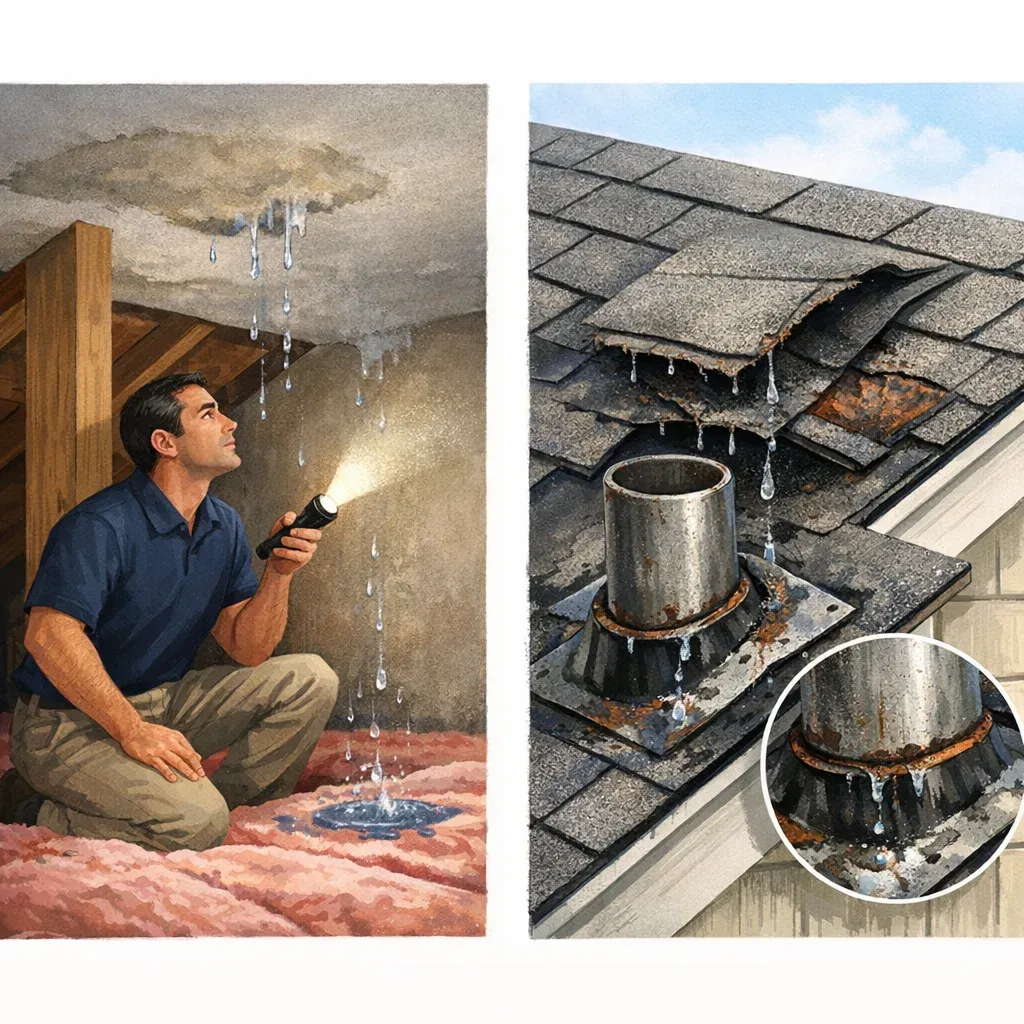
Imagine an inspector notes fresh attic staining and poor flashing at a roof joint. The buyer asks a roofer to examine accessible areas and provide findings. The seller offers a past repair invoice. The buyer then compares the report, roof advice, and records before deciding whether to ask for repairs or change terms. This is an illustrative path, not a prediction of how any sale will end.
Keep a decision worksheet
For each major item write: finding, evidence, expert needed, worst known outcome, likely next action, and decision date. Keep photos and estimates together. This stops the same question from being asked in several email threads and helps an adviser see what remains unresolved.
If you cannot get enough information before a deadline, ask your adviser about the risk of proceeding with uncertainty. Do not replace missing facts with a promise that “it will probably be fine.” For local availability and coverage, review Coquitlam home inspection services.

When to stop investigating
Stop when you have enough reliable information to make a decision within your contract, not when every part of an old home looks new. Some normal wear is expected. The goal is to understand major unknowns and whether you can handle them.
How to compare two different kinds of risk
A broken bathroom fan might have a simple repair path. Unexplained water at a foundation can be harder because the source and extent are unknown. The amount of uncertainty is often as important as the visible damage.
Ask three questions for each finding: Is it safe right now? What must be checked to understand the cause? What is the likely range of repair work? If an expert cannot answer without opening a wall, write that limit down. A buyer may be comfortable with known maintenance yet uneasy with an unknown structural condition.
Talk with your adviser about how these unknowns fit your budget and purchase terms. Two buyers can reasonably make different choices from the same report. The goal is to make an informed choice, not to force one answer from every finding.

Bottom line
Major findings are a signal to clarify, price, and decide. A calm, written process is more useful than either panic or denial. For a broader view of home inspection services in the Lower Mainland, visit ENG Inspections.
Frequently asked questions
Can I cancel a BC home purchase after a bad inspection?
The answer depends on the signed contract and its conditions. Speak with your real estate professional or lawyer before making that decision.
Does a seller have to fix inspection issues?
Not automatically. Repairs or credits depend on agreements between the parties and the contract.
Can the inspector give me an exact repair cost?
Do not rely on the inspector for a firm quote. A qualified repair professional can assess scope and pricing; a specialist may be needed first.
What if a specialist cannot visit before subject removal?
Ask your real estate professional or lawyer promptly about options and deadlines. Do not assume an extension is automatic.
Sources and further reading
Official sources support the regulatory and buying-process information above. This article is general education, not a property assessment, legal advice, or a warranty promise.